
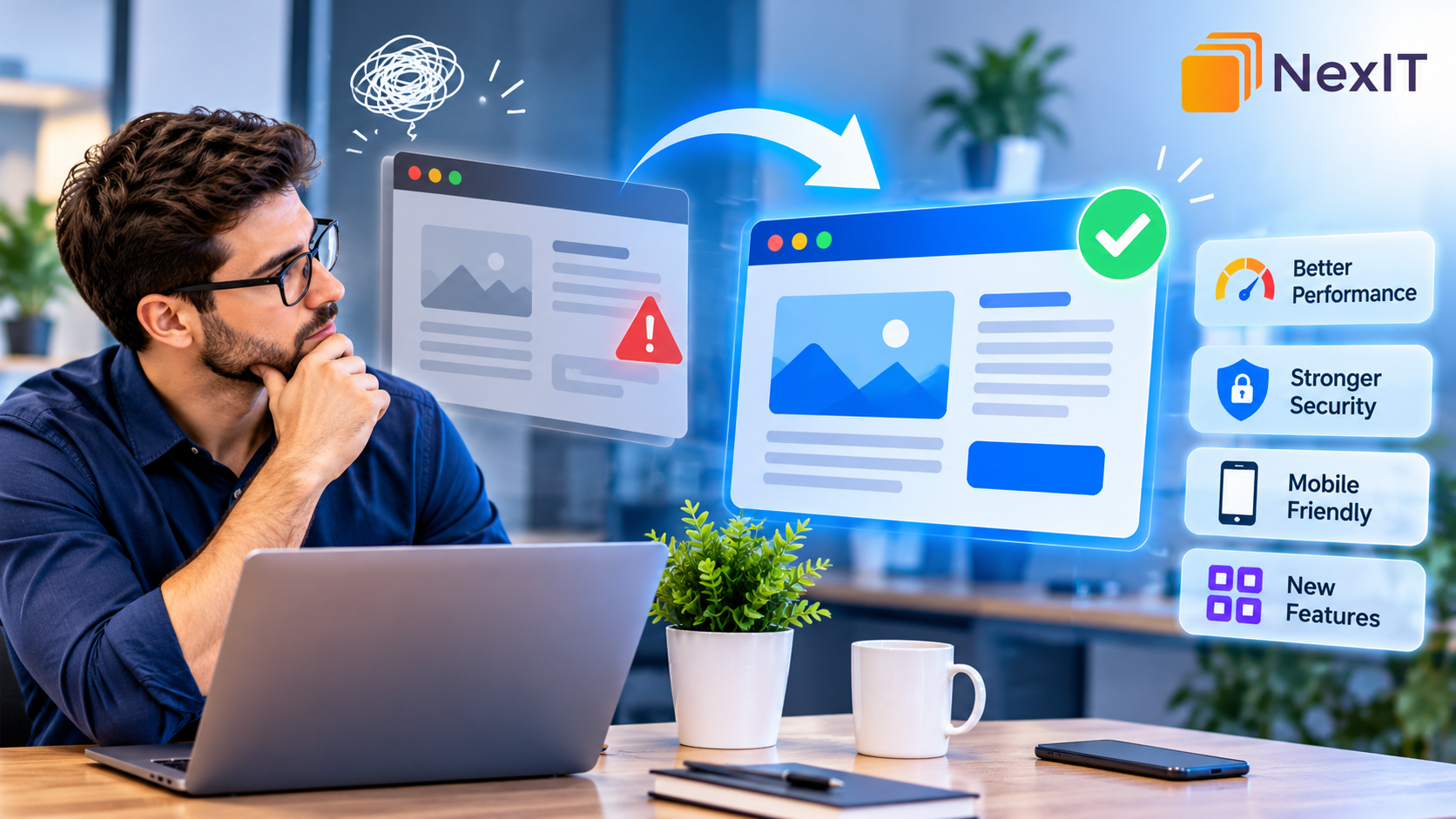
A web application may work well when your business first launches it. However, as your business grows, customer expectations change, data increases and new operational requirements emerge. An application that once handled everyday tasks efficiently may eventually become slow, difficult to maintain or unable to support new features.
Upgrading your web app at the right time helps maintain performance, improve security and support business growth. Therefore, businesses should regularly evaluate their application’s performance, functionality and technical limitations instead of waiting for major problems to appear.
Your web app becomes noticeably slower
Slow loading times and delayed responses are common signs that an application needs attention. As the number of users, database records and background processes increases, the existing infrastructure may struggle to handle the workload.
For example, an online booking application may respond quickly with a small number of customers. However, increased traffic and database activity can create delays during busy periods.
Consider an upgrade when you notice:
Pages taking longer to load.
Delays when submitting forms.
Slow database searches.
Frequent timeouts during busy periods.
Poor performance across different devices.
Developers can investigate database queries, server resources, caching and application code to identify performance bottlenecks. Additionally, load testing can help determine whether the existing infrastructure can handle future traffic.
Your business needs new features
Business requirements rarely remain the same. You may initially need a simple customer dashboard, but later require automated notifications, payment processing, reporting tools or third-party integrations.
However, adding features to an outdated application can become difficult when its original architecture does not support new functionality.
An upgrade may help you:
Introduce new business workflows.
Connect external platforms and services.
Automate repetitive administrative tasks.
Improve customer account management.
Expand reporting and analytics capabilities.
Before adding functionality, identify which features provide genuine business value. This approach helps prevent unnecessary development costs and keeps the application manageable.
When evaluating web app development services Pakhelam, discuss how the proposed upgrade will support current requirements without creating unnecessary technical complexity.
Your application has security vulnerabilities
Security requirements change as new vulnerabilities emerge and software dependencies receive updates. Consequently, an application that was secure when developers first launched it may become exposed to new risks over time.
Pay attention to warning signs such as:
Outdated frameworks or plugins.
Unsupported software components.
Weak authentication methods.
Unnecessary administrator permissions.
Missing security updates.
Unusual application activity.
Developers should review dependencies, access controls, authentication systems and server configurations. Furthermore, they should apply security patches and test important application functions after updates.
If your application handles customer information, payment details or confidential business records, regular security reviews become particularly important.
Your current technology limits business growth
An application’s original technology may suit a small business but struggle as operations expand. For example, a system built around a single database structure may become difficult to extend when you introduce additional departments, integrations or user roles.
In these situations, a technical upgrade may be more effective than repeatedly adding temporary fixes.
Consider reviewing:
Application architecture and scalability.
Database structure and performance.
API integration capabilities.
Framework and programming language support.
Hosting infrastructure and resource requirements.
However, replacing the entire application is not always necessary. Sometimes, improving selected components can resolve technical limitations without rebuilding everything.
For businesses considering web application development Pakhelam, understanding the existing architecture helps developers recommend an appropriate upgrade strategy.
Users frequently report problems
Customer and employee feedback can reveal usability problems that technical performance reports might overlook.
For instance, users may struggle with complicated navigation, confusing forms or features that no longer match their needs. As a result, they may take longer to complete tasks or contact support more frequently.
Watch for these common indicators:
Repeated complaints about specific features.
Difficulty completing important workflows.
Increased support requests.
Poor mobile usability.
Confusing navigation and interface layouts.
Collect feedback through support requests, user interviews and application analytics. Then, prioritise improvements based on how frequently problems occur and how much they affect users.
Maintenance becomes increasingly expensive
An older application may require frequent fixes because its components no longer work well together. In addition, outdated dependencies and unsupported frameworks can make routine maintenance more difficult.
For example, developers may spend considerable time fixing compatibility problems instead of improving important business features.
Review your maintenance expenses and identify recurring technical issues.
An upgrade may be worthwhile when it can:
Reduce repeated maintenance work.
Replace unsupported components.
Simplify application architecture.
Improve compatibility with modern browsers.
Make future development easier.
Compare the cost of maintaining the existing system with the estimated cost of upgrading it. This comparison helps determine whether targeted improvements or a larger redevelopment project offers better long-term value.
Your web app does not work properly on mobile devices
Mobile usability is essential for applications that customers and employees access from different devices.
If your application requires excessive scrolling, displays poorly on smaller screens or contains difficult-to-use buttons, users may struggle to complete basic tasks.
A mobile-focused upgrade should address:
Responsive layouts for different screen sizes.
Readable text and appropriate spacing.
Touch-friendly buttons and navigation.
Mobile-friendly forms and input fields.
Consistent functionality across supported devices.
Additionally, test important workflows on smartphones and tablets rather than relying only on desktop previews.
How often should you evaluate your web application?
There is no universal upgrade schedule for every web application. The right frequency depends on its complexity, security requirements, business usage and technology stack.
However, regular reviews help identify problems before they affect daily operations.
| Review area | What to evaluate |
|---|---|
| Performance | Loading speed and response times |
| Security | Vulnerabilities and outdated dependencies |
| Functionality | Features and business requirements |
| User experience | Navigation and customer feedback |
| Compatibility | Browsers and mobile devices |
| Maintenance | Recurring fixes and operating costs |
For best results, review application performance regularly and reassess requirements before major business changes or new feature releases.
Conclusion
Upgrading your web application is not simply about adopting newer technology. It is about maintaining performance, improving security, supporting changing business requirements and providing a better user experience.
By reviewing application performance, collecting user feedback and identifying technical limitations early, businesses can make informed upgrade decisions and avoid unnecessary development costs.
NexIT Solutions helps businesses explore practical web application development solutions based on their technical requirements and operational goals. Whether you need to improve an existing application or plan a more extensive upgrade, taking the right steps early can support long-term business growth.
Talk to a NexIT Expert
New Enquiries: 1300 899 259 | Support Team: [email protected]
REQUEST A FREE CONSULTATION