
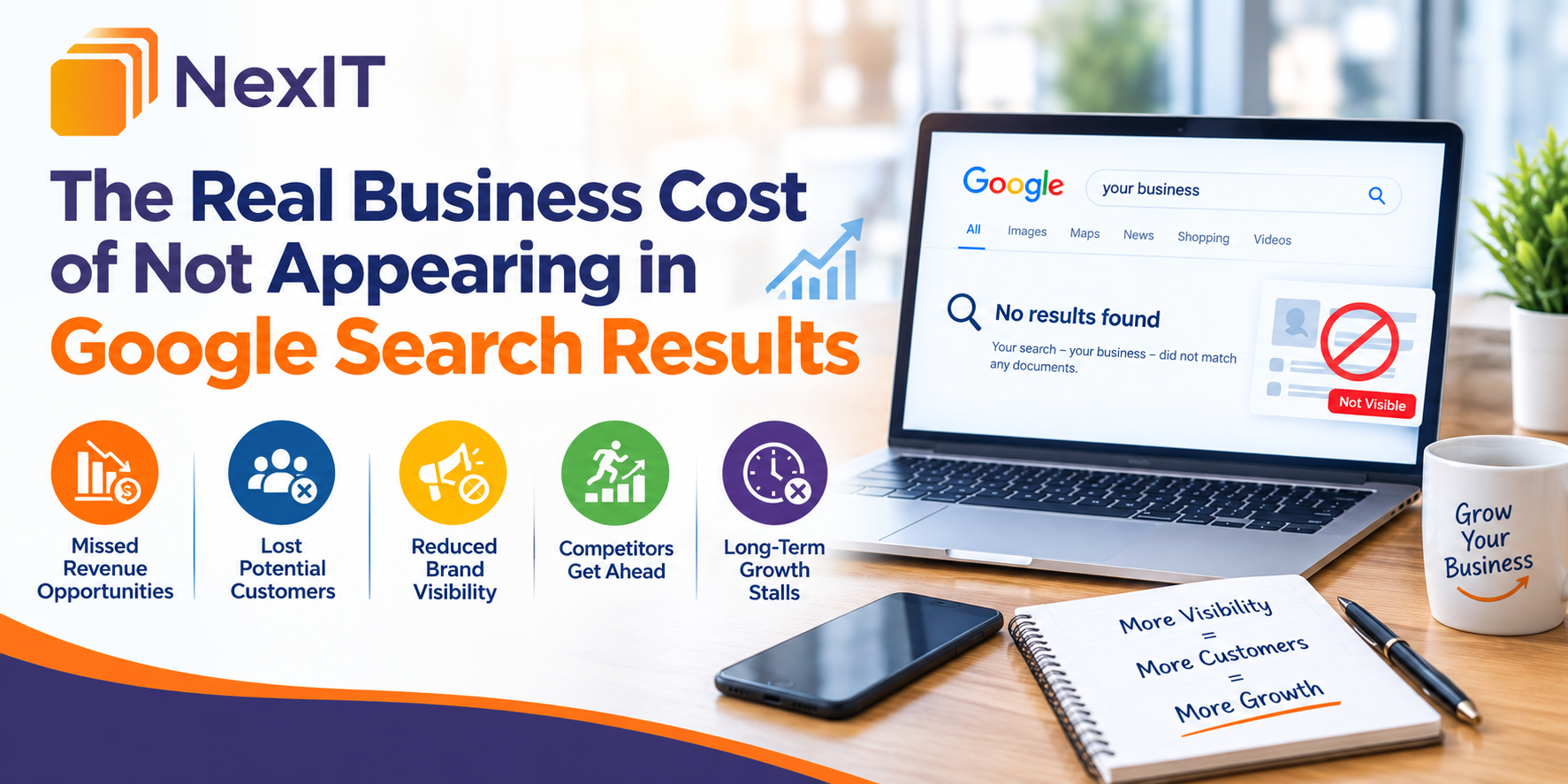
When potential customers search for the services your business provides, your visibility can influence whether you enter their shortlist.
If they find competitors but cannot find your business, you may lose opportunities before you receive a phone call, website visit or enquiry.
These missed opportunities rarely appear as a separate expense in your accounts. However, they can affect customer acquisition, brand awareness and the return you receive from your website.
The real business cost of poor Google visibility depends on your industry, customer demand, competition and ability to convert enquiries into sales.
Understanding these costs helps you decide where SEO fits within your wider business growth strategy.
We Start With How Customers Find Your Business
Customers can discover a business through referrals, advertising, social media, directories and Google Search.
When someone searches for a specific service, they may already have a problem to solve or a purchase to make.
For example, potential customers might search for:
- “SEO company Melbourne”
- “IT support Moorabbin”
- “website design Melbourne”
- “digital marketing agency Dandenong”
- “software development company Australia”
If your business is difficult to find for relevant searches, those customers may explore other providers.
First, establish whether your pages are missing from Google’s index or simply appearing too low for the searches that matter. These are different problems and require different responses.
You Can Miss Enquiries From Customers Ready to Act
Some searches indicate an immediate need.
A business searching for “IT support Melbourne” may need assistance with an operational problem. Someone searching for “website development quote” may be comparing providers before starting a project.
When your business does not appear prominently, you may miss the opportunity to explain your services to these potential customers.
The possible consequences include:
- Fewer relevant website visits.
- Fewer calls and quote requests.
- A smaller pool of prospective customers.
- Fewer opportunities for your sales team.
Visibility alone does not guarantee enquiries. Your offer, website and contact process still need to meet the customer’s needs.
Your Competitors May Enter the Shortlist First
Customers cannot compare a business they have not discovered.
A competitor that appears for relevant searches has an opportunity to introduce its services, demonstrate experience and answer the customer’s questions.
While you remain difficult to find, that competitor may receive:
- The first website visit.
- The first consultation request.
- The opportunity to explain its approach.
- The chance to build a relationship.
This does not establish that the competitor will win every sale. It gives them an opportunity your business may never receive.
Your Website May Deliver Less Business Value
Building a website takes time and money. Businesses invest in design, development, content, hosting and maintenance.
If relevant customers rarely discover the website, it may contribute less to customer acquisition than expected.
A website can still support referrals and existing customers, but limited search visibility may restrict its ability to attract new prospects.
To assess its value, look beyond appearance and ask:
- Are people discovering the website through relevant searches?
- Which pages attract potential customers?
- Do visitors understand the services?
- Can they request a quote easily?
- Are enquiries becoming paying customers?
These questions connect website performance to business outcomes.
You May Rely More Heavily on Paid Acquisition
Paid advertising can help businesses reach customers and test demand. However, limited organic visibility may increase your dependence on paid channels.
If paid campaigns provide most of your enquiries, reducing the advertising budget could reduce the flow of new prospects.
Organic search can provide an additional acquisition channel, although SEO requires investment in content, technical improvements and ongoing management.
A balanced strategy considers:
- The cost of acquiring a qualified lead.
- The quality of enquiries from each channel.
- Conversion rates.
- Customer value.
- The consistency of results over time.
The aim is to build an acquisition approach that supports your business goals and budget.
Potential Customers Have Fewer Opportunities to Learn About You
Customers often research a business before contacting it.
They may look for service information, reviews, examples of previous work and answers to common questions.
If your business is difficult to find, customers have fewer opportunities to discover that evidence.
Useful search-visible pages can introduce:
- Your services and areas of expertise.
- The industries you support.
- Your approach to solving customer problems.
- Relevant project examples.
- Genuine customer feedback.
- Clear contact information.
Appearing on Google is not proof of quality. It creates an opportunity for customers to evaluate the evidence you provide.
Local Customers May Find Another Provider
For businesses serving Melbourne and nearby suburbs, local search can help customers discover suitable providers.
Limited visibility in Google Maps and local results may mean missed opportunities from people searching nearby.
Google explains that local results are mainly based on relevance, distance and popularity. Complete business information and genuine reviews can support local visibility, but a business cannot control every factor, including its distance from the searcher.
A practical local presence includes:
- Accurate Google Business Profile information.
- Appropriate business categories.
- Current opening hours.
- Clear contact details.
- Genuine customer reviews.
- Useful information about services and locations.
- Website pages that accurately describe where you operate.
Want to understand where your business is missing relevant search opportunities?
👉 Book a Website Consultation
📞 Call 1300 899 259
You Can Miss Customers During the Research Stage
Customers do not always begin by searching for a supplier.
They may first ask:
- “How much does SEO cost in Melbourne?”
- “Why is my website not generating enquiries?”
- “Does my business need managed IT support?”
- “What should I check before hiring a web developer?”
Helpful content gives your business an opportunity to answer these questions.
If you have no useful pages covering relevant topics, customers may learn from competitors and become familiar with their services instead.
Effective content should address genuine customer needs and explain a relevant next step. Publishing large numbers of articles without a clear purpose does not guarantee visibility or enquiries.
The Cost Can Extend Beyond the First Sale
A missed enquiry may represent more than one lost transaction.
Depending on your business, a new customer might later purchase additional services, renew a contract or recommend you to someone else.
When assessing missed opportunities, consider:
- The likely value of the first purchase.
- The contribution profit from that purchase.
- The possibility of repeat business.
- The cost of serving the customer.
- The length of the customer relationship.
Future purchases and referrals are uncertain. Use your own customer records to develop realistic estimates.
How Can You Estimate the Cost of Missed Search Opportunities?
There is no universal financial figure for poor Google visibility.
A useful estimate starts with a clearly stated scenario:
Additional relevant visits × Enquiry rate × Sales conversion rate × Average sale value
For example, suppose improved visibility could generate:
- 200 additional relevant visits per month
- A 3% enquiry rate
- A 25% enquiry-to-sale conversion rate
- An average sale value of A$2,000
The calculation would be:
200 × 3% = 6 enquiries
6 × 25% = 1.5 sales per month on average
1.5 × A$2,000 = A$3,000 in potential monthly revenue
This is an illustrative scenario, not a forecast or a measurement of your actual losses.
To assess the commercial benefit, also account for profit margins, acquisition costs, sales capacity and the possibility that some customers would have contacted you through another channel.
Why Your Business May Be Difficult to Find
Limited visibility can have several causes.
These may include:
- Important pages that are not indexed.
- Accidental indexing restrictions.
- Unclear service descriptions.
- Content that does not match customer searches.
- Weak internal navigation and links.
- Technical problems affecting page access.
- Incomplete local business information.
- Strong competition for broad search terms.
- Limited useful evidence of your experience.
Google’s guidance explains that SEO helps search engines understand content and helps users discover a website. However, following SEO practices does not guarantee indexing or a particular ranking.
An assessment should identify the actual barriers before deciding what to change.
How Can Your Business Reduce These Missed Opportunities?
Begin with the services and locations most important to your business.
A practical plan may include:
- Checking important pages in Google Search Console.
- Researching how customers search for your services.
- Improving priority service pages.
- Writing clear page titles and descriptions.
- Fixing relevant technical problems.
- Updating Google Business Profile information.
- Publishing useful answers to customer questions.
- Adding relevant internal links.
- Improving mobile usability and enquiry forms.
- Building relationships that earn relevant mentions and links.
- Tracking qualified enquiries and resulting sales.
Prioritise work according to the likely business benefit and the evidence available.
Common Mistakes That Make the Problem Harder to Solve
Businesses can waste time when they:
- Assume a new website will rank automatically.
- Check only whether their business name appears.
- Focus on keywords with little customer relevance.
- Copy competitors’ content.
- Create repetitive location pages without useful local information.
- Treat every website visit as equally valuable.
- Measure rankings without tracking enquiries.
- Make changes without recording their effects.
- Expect immediate results from SEO.
Appearing for your company name is useful, but it does not show whether new customers can find you when searching for your services.
Measure Business Outcomes Alongside Search Visibility
Search impressions, clicks and positions help explain visibility. Business outcomes help show its value.
Track both where possible:
- Visibility for relevant searches.
- Visits to important service pages.
- Calls and completed enquiry forms.
- Qualified leads.
- Quote requests.
- Sales conversion rates.
- Revenue and contribution profit associated with acquired customers.
Use consistent reporting periods and consider seasonal demand.
An increase in relevant enquiries may be more useful than a large traffic increase from people unlikely to become customers.
What Poor Google Visibility Could Be Costing Your Business
The cost of not appearing in relevant Google results can include missed enquiries, fewer opportunities to build awareness and greater reliance on other acquisition channels.
The scale of that cost depends on your market and the performance of your website and sales process.
Start by identifying which searches matter, whether customers can find your business and what happens after they reach your website.
That evidence provides a stronger basis for deciding where to invest.
Ready to Improve Your Google Visibility?
NexIT Solutions offers SEO and digital marketing services for businesses in Melbourne and across Australia.
A website consultation can help identify priorities for improving your online presence and connecting search performance with customer enquiries.
Book a Website Consultation →
Or call 1300 899 259 and explain what you would like your website to achieve.