
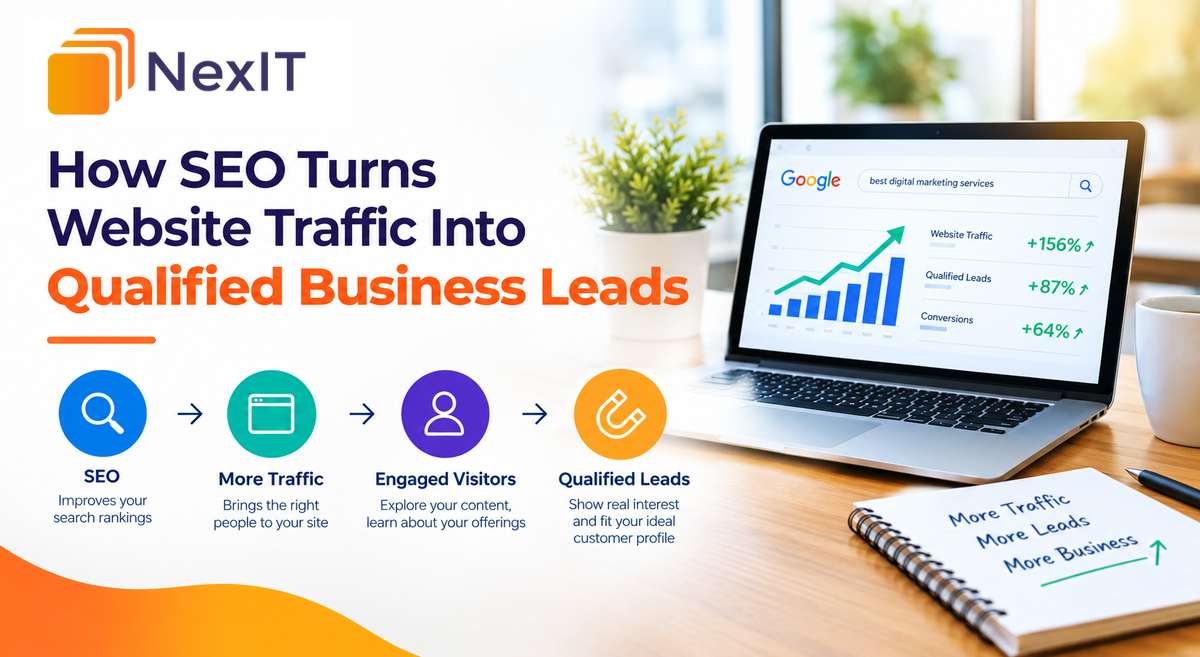
Attracting visitors to your website is an important step in growing your business, but traffic alone does not guarantee enquiries or sales. A website may receive many visits while generating few useful leads if those visitors are looking for something different from what the business offers.
Search engine optimisation helps businesses connect with people who are actively searching for relevant services, products or solutions. When SEO brings the right audience to helpful pages with clear next steps, it can support a steady flow of qualified business leads.
A qualified lead is a potential customer whose needs match your services and who shows a realistic interest in working with your business. Qualification may also depend on their location, budget, project requirements and readiness to buy.
Why Is SEO Important for Business Lead Generation?
People often use search engines to research problems, compare providers and find businesses that can meet their needs. Appearing for relevant searches gives your business an opportunity to reach potential customers during this decision-making process.
Effective SEO connects search visibility with useful website content and a straightforward enquiry process. It helps visitors understand what you offer, whether your services suit their needs and how to contact you.
Key Benefits:
- Relevant Website Visitors: SEO helps attract people searching for services and solutions your business provides.
- Stronger Buying Intent: Service-related searches can connect your business with visitors who are considering a purchase or enquiry.
- Greater Customer Confidence: Clear service information, genuine testimonials and useful answers help visitors assess your business.
- More Opportunities for Enquiries: Relevant landing pages and accessible contact options make it easier for interested visitors to take action.
- Measurable Business Results: Tracking enquiries and lead quality helps businesses evaluate SEO beyond visitor numbers.
What Is the Difference Between Website Traffic and Qualified Leads?
Website traffic refers to visits to your website. A lead is someone who expresses interest through an action such as submitting an enquiry, calling your business or requesting a consultation.
However, not every enquiry is a qualified lead. Some people may need a service you do not provide, live outside your service area or have requirements that do not match your business.
For example, a Melbourne website development company may attract visitors reading about free website builders. Those visits can be useful for awareness, but an enquiry from a Melbourne business seeking a professionally developed website is more closely aligned with its services.
The goal is to attract relevant visitors and help suitable prospects take the next step.
How SEO Attracts People With the Right Search Intent
Search intent is the purpose behind a search. Understanding it helps businesses create pages that match what potential customers need.
Someone searching for “what is SEO” may be learning the basics. Someone searching for “SEO services Melbourne” may be comparing providers. A person searching for “request an SEO consultation Melbourne” may be ready to contact a business.
Common Types of Search Intent:
- Informational: The visitor wants an explanation, answer or guide.
- Commercial: The visitor is researching services or comparing options.
- Transactional: The visitor wants to purchase, book or request a service.
- Navigational: The visitor wants to find a particular business or website.
A balanced SEO strategy supports different stages of this journey. Educational content introduces your expertise, while service pages help potential customers evaluate your offering and enquire.
Choosing Keywords That Support Lead Generation
Keyword selection should reflect your services, customer needs and target locations. Choosing terms only because they attract large search volumes can bring visitors who are unlikely to become customers.
More specific keywords can help businesses reach people with clearer requirements.
Examples include:
- SEO services for small businesses in Melbourne
- Ecommerce website development Melbourne
- Local SEO services for dental clinics
- Business website redesign Melbourne
- IT support for Melbourne businesses
These searches provide more context about what the visitor needs. Businesses should prioritise keywords that accurately match their services and build useful pages around them.
Creating Service Pages That Encourage Enquiries
Once a potential customer reaches your website, the page should help them decide whether your business is suitable.
A strong service page explains what you offer, who the service is for, how it addresses the customer’s problem and what happens next.
Useful Elements Include:
- A Clear Heading: State the service and its relevance to the visitor.
- Specific Service Information: Explain the scope, deliverables and available options.
- Customer Benefits: Describe the practical outcomes the service is intended to support.
- Evidence of Experience: Include relevant projects, genuine testimonials or case studies.
- Helpful Answers: Address common questions about timelines, pricing factors and the process.
- A Clear Call to Action: Make it easy to request a quote, book a consultation or contact your team.
Pages should provide enough information to support an informed enquiry without overwhelming visitors with repetitive content.
How Local SEO Connects Businesses With Nearby Customers
For businesses serving particular locations, local SEO helps align website visibility with the areas they actually cover.
A Melbourne business may benefit from explaining its services and service areas clearly. Where useful, location pages can provide relevant information about the customers served in a particular suburb.
Accurate business details, an appropriately maintained Google Business Profile and genuine customer reviews can also support local discovery.
Location content should offer practical value. Repeating the same page with different suburb names gives potential customers little additional information.
Building Trust Through Helpful Website Content
Potential customers often need answers before they feel comfortable contacting a business. Helpful content reduces uncertainty and demonstrates an understanding of their needs.
For example, a business considering SEO may want to know what the service includes, how progress is measured and which factors influence the cost.
Content That Can Support Lead Generation:
- Guides explaining how a service works.
- Answers to common customer questions.
- Case studies describing real projects and outcomes.
- Comparisons that explain relevant options fairly.
- Articles addressing common business problems.
- Information about pricing factors and project preparation.
Each piece should connect naturally to an appropriate service page when that service would help the reader.
Why Website Experience Matters After the Click
SEO brings visitors to your website, but their experience influences whether they stay and enquire.
Slow pages, confusing navigation, unclear information or difficult forms can interrupt the journey. Improving usability helps visitors find what they need and complete their intended action.
Important Website Improvements:
- Make pages easy to use on mobile devices.
- Keep navigation clear and consistent.
- Use readable headings and concise explanations.
- Make contact details easy to find.
- Check that enquiry forms work correctly.
- Clearly explain what happens after an enquiry.
- Improve page loading performance.
These improvements support conversion by reducing unnecessary effort for potential customers.
Using Calls to Action That Match the Visitor’s Needs
A call to action tells visitors what they can do next. It should be specific, relevant and appropriate to their stage in the decision-making process.
Someone reading an introductory guide may want to explore your services. Someone reviewing a detailed service page may be ready to request a quote.
Examples include:
- Request an SEO consultation.
- Discuss your website project.
- Get a quote for your business.
- Explore our local SEO services.
- Contact our team about your requirements.
Explain the next step clearly. If a consultation involves discussing goals and reviewing the website, say so rather than leaving visitors unsure about what they are booking.
How Enquiry Forms Can Improve Lead Quality
A useful enquiry form makes contact easy while collecting enough information to assess the request.
Asking too many questions can discourage visitors. Asking too few may leave your team without the details needed to respond effectively.
Depending on the service, useful fields may include:
- Name and business name.
- Email address or phone number.
- Website address.
- Service required.
- Project goals or main challenge.
- Preferred timeframe.
- An optional budget range.
Request only information that helps your team understand the enquiry. Explain why additional details are needed where appropriate.
Measuring Whether SEO Produces Qualified Leads
An increase in organic traffic does not automatically mean SEO is producing better business results. Businesses should connect website activity with enquiries and the outcomes of those enquiries.
Useful Measures Include:
- Organic Search Traffic: Visits coming from unpaid search results.
- Organic Enquiries: Enquiries attributed to organic search through your measurement setup.
- Conversion Rate: The proportion of relevant visits that result in a defined action.
- Qualified Lead Rate: The proportion of enquiries that meet your business’s qualification criteria.
- Sales Outcomes: How many qualified leads become customers.
- Landing Page Performance: Which pages attract suitable prospects and generate useful enquiries.
Website analytics and customer records should be reviewed together. Attribution may be incomplete when customers return through another channel, call directly or use multiple devices.
Common Mistakes That Reduce SEO Lead Quality
Businesses can attract traffic without attracting suitable customers when their SEO and website content are poorly aligned.
Common mistakes include:
- Targeting keywords unrelated to the services offered.
- Promoting locations the business does not serve.
- Publishing broad content without relevant next steps.
- Using vague service descriptions.
- Making unsupported claims about results.
- Hiding contact details or using complicated forms.
- Measuring success only through rankings and traffic.
- Failing to follow up on enquiries promptly.
Reviewing these issues helps businesses improve the connection between search visibility and useful customer conversations.
Building an SEO Strategy Around Business Leads
An effective strategy starts with understanding your ideal customers and the problems your business can solve.
1. Define Your Ideal Customer
Identify the industries, locations, project types and requirements that suit your services.
2. Map Searches to Customer Needs
Choose relevant search topics and keywords for learning, comparing and enquiring.
3. Improve Important Landing Pages
Make service pages useful, clear and easy to act on.
4. Publish Supporting Content
Answer questions that help customers make informed decisions and connect them to relevant services.
5. Track Enquiries and Qualification
Use consistent criteria to determine which enquiries match your business.
6. Refine the Strategy
Use lead quality, customer feedback and sales outcomes to guide future improvements.
How SEO Supports Business Growth
SEO can help businesses reach potential customers at the moment they are researching a relevant need. Its contribution becomes more useful when search visibility is supported by helpful content, clear service information and an effective enquiry process.
For businesses in Melbourne and across Australia, attracting qualified leads requires attention to the full customer journey. Relevant keywords bring suitable visitors, useful pages build confidence, and clear next steps help interested prospects contact your team.