
For many people, choosing a dentist starts with an online search. They may be looking for a nearby clinic, comparing treatment options or trying to find a practice that makes them feel comfortable. Before making contact, they often visit a dental website to understand the services offered, check the location and decide whether booking an appointment will be straightforward.
For dental practices across Melbourne, a well-designed website can make that decision easier. It provides essential information, communicates professionalism and helps potential patients take the next step.
Effective dental web design Melbourne is about more than creating an attractive homepage. It combines usability, relevant content, mobile performance and local search optimisation to help the right people discover your practice and enquire about appointments.
1. Make a Strong First Impression
Your website may be the first interaction someone has with your dental practice. A cluttered layout, outdated information or difficult navigation can create uncertainty before a patient even contacts your team.
A professional design should reflect the atmosphere of your clinic. Use consistent colours, readable typography, clear page layouts and genuine photographs of your practice where appropriate.
Visitors should quickly understand who you are, where your clinic is located and which services you provide. Display essential contact details and a clear appointment booking option prominently.
A welcoming, organised website helps people find information without feeling overwhelmed and gives them a clearer picture of what to expect.
2. Make Booking an Appointment Simple
A potential patient should not have to search through multiple pages to arrange an appointment. A straightforward booking process can remove unnecessary barriers between visiting your website and contacting your practice.
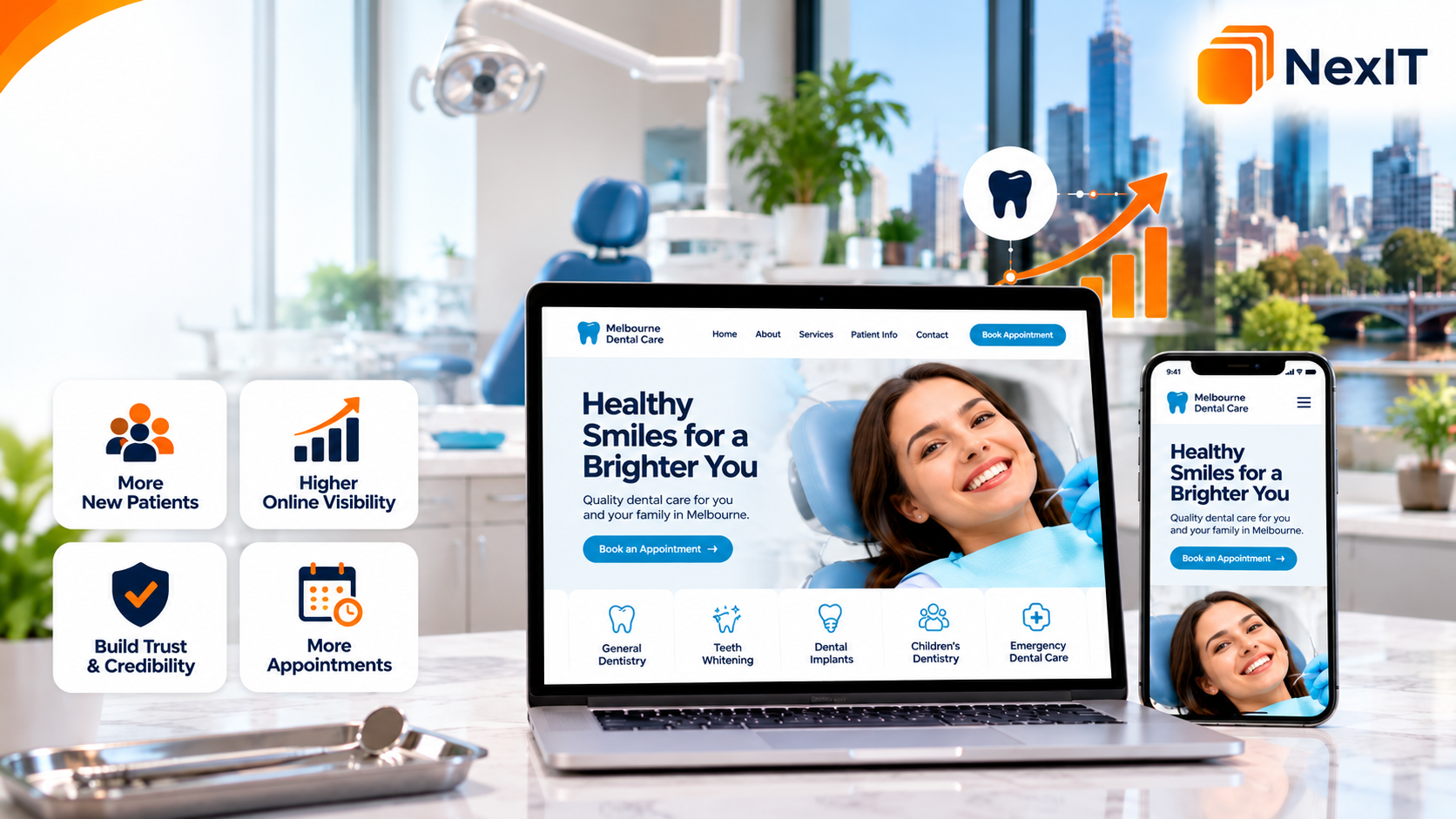
Include a visible “Book an Appointment” button, a clickable phone number and a simple enquiry form. If you use an online booking platform, make sure it works smoothly on both desktop and mobile devices.
Forms should request only the information needed for an initial enquiry. Avoid unnecessary steps that could discourage visitors from completing the process.
For Melbourne dental practices, convenient booking options can help accommodate people with different schedules and preferences. Always test your booking links and forms regularly to ensure they work as intended.
3. Create Clear Pages for Dental Services
People often search for specific treatments rather than a dental clinic in general. A website that explains each service clearly can help visitors understand whether the practice offers what they are looking for.
Instead of placing every treatment on one long page, consider dedicated pages for relevant services such as general dentistry, children’s dentistry, teeth whitening, dental implants or emergency dental care, where these are offered.
Each page should explain the service in plain English, describe what a patient can generally expect and provide a clear way to ask questions or arrange an appointment.
Accurate, useful information also gives search engines a better understanding of the page. Avoid exaggerated claims or promises about treatment outcomes, and ensure clinical content is reviewed by an appropriately qualified professional.
4. Optimise Your Website for Mobile Devices
Many people search for local services on their smartphones. If a dental website loads slowly, displays poorly or has buttons that are difficult to tap, visitors may struggle to find the information they need.
Responsive web design allows your website to adapt to different screen sizes. Text should remain readable, menus should be easy to use and booking options should be accessible without excessive scrolling.
Mobile performance also supports your wider SEO strategy. Google uses the mobile version of website content for indexing, so important service details and information should remain available on smaller screens.
Test your website across different devices and browsers, paying particular attention to page speed, navigation, accessibility and the appointment booking process.
5. Strengthen Local SEO for Melbourne Patients
A well-designed website needs to be discoverable. Local SEO helps search engines understand which services your practice provides and which geographic area it serves.
Use relevant phrases such as dental web design Melbourne naturally in your website’s SEO content when discussing your digital services, and ensure the dental practice’s own pages use accurate treatment and location information.
For a dental clinic, this could include clear service pages, a detailed contact page, consistent business name and address information, and accurate opening hours. Keep your Google Business Profile updated and make sure its details match the information on your website.
If your practice genuinely serves multiple Melbourne suburbs or has several clinic locations, provide useful location-specific information for each relevant area. Avoid creating repetitive pages that simply replace one suburb name with another.
6. Build Trust While Meeting Advertising Requirements
Patients need reliable information when choosing a healthcare provider. Your website can help by presenting practitioner qualifications accurately, explaining services clearly and providing practical details about the clinic, accessibility and payment arrangements where relevant.
For Australian dental practices, website content must also follow applicable health advertising requirements. Ahpra’s guidelines prohibit advertising that is misleading, creates unreasonable expectations about treatment benefits or uses testimonials about clinical aspects of regulated health services. Review the official guidance before publishing patient reviews, treatment claims or promotional offers. <Cite refs={[“turn219547search0″,”turn219547search4”]} />
Clear, factual content helps visitors make informed decisions without relying on exaggerated promises.
Talk to a NexIT Expert
New Enquiries: 1300 899 259 | Support Team: [email protected]
REQUEST A FREE CONSULTATION