
Choosing a platform is an early app decision. Should you launch on iPhone, Android or both? The answer depends on your users, required features and budget. Supporting every platform can widen access, but adds development, testing and support work.
Base the decision on evidence about your audience.
Start with your audience and business goal
Identify who will use the app and what they need to do. Are they customers booking appointments, staff managing jobs or suppliers checking orders? Find out which devices they use.
For a Mulgrave business, users might include customers, mobile employees or clients across several locations. Ask customers about their devices, review available analytics and speak with staff. This gives mobile app development Mulgrave projects a clearer starting point.
Define the outcome too. An appointment app might aim to reduce phone bookings and simplify schedule changes.
Understand the platform options
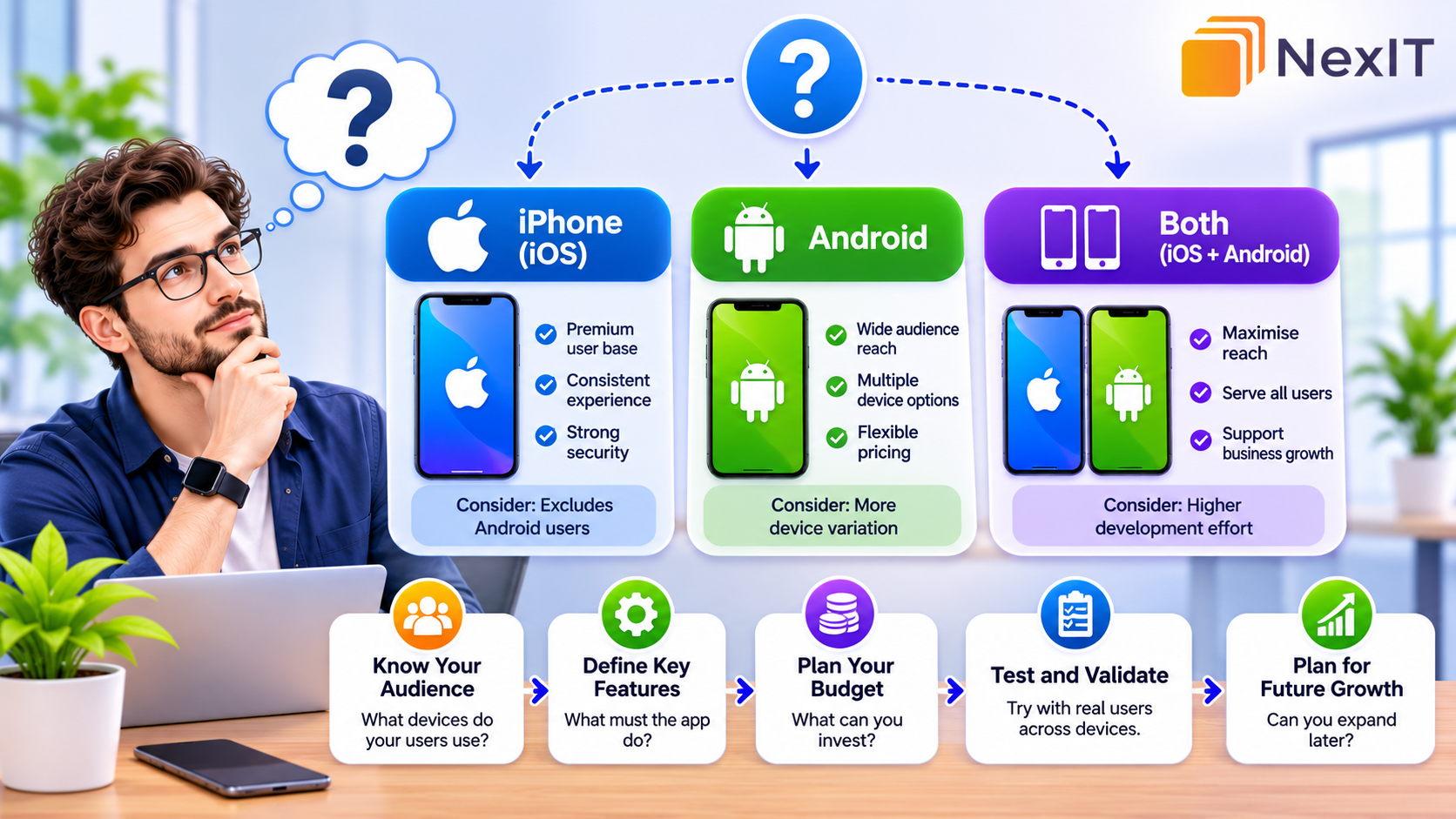
You can build for iOS, Android or use a cross-platform approach to support both. Each has advantages and trade-offs.
| Option | Potential advantages | Points to consider |
|---|---|---|
| iPhone (iOS) | Focuses on Apple devices and a consistent hardware ecosystem | Excludes Android users; needs iOS-specific testing |
| Android | Reaches users across many device brands and price points | Device and operating-system variation can increase testing |
| Both platforms | Offers broader access across iOS and Android | Requires planning for platform differences, testing and support |
Cross-platform tools allow code sharing, but real-device testing is still necessary. Native development may suit apps that rely on specific device capabilities. Discuss the trade-offs with a mobile app development company Mulgrave before choosing.
When should you launch on one platform first?
A single-platform launch can work when research shows that most intended users prefer one operating system, or when you want to test a focused first release.
It may suit your project if:
Your initial audience is concentrated on iPhone or Android.
You are piloting the app with a small customer or staff group.
Your budget requires a staged rollout.
You want to validate the main user journey first.
Do not choose one platform only because it appears cheaper. Consider whether excluding the other group could affect sales, staff adoption or customer service. Check that the technical foundation can support expansion later.
When is it better to launch on both?
Both platforms may be necessary when your audience uses a mix of devices or the app is central to your service. A booking app promoted to all customers, for example, should be accessible regardless of their phone.
This approach can also suit mixed-device workforces. Plan for platform-specific interface conventions, accessibility, notifications, permissions and app store requirements so the experience remains consistent.
Define the first release before estimating cost
Platform choice is only one cost factor. Features, user roles, integrations, data handling, design complexity and testing also affect the estimate.
Prioritise what users need to complete the main task. A first release might include:
Secure sign-in, if accounts are necessary.
The core task, such as booking, ordering or viewing job details.
Essential confirmations or notifications.
Basic reporting or support tools for the business.
Keep optional ideas for later. A minimum viable product should be focused, but still secure, accessible and reliable. Ask for estimates that separate discovery, design, development, testing, release and maintenance.
Plan for testing, launch and ongoing support
Test screen sizes, operating-system versions, connectivity, permissions, accessibility and complete user journeys. If launching on both platforms, check each separately.
A mobile app development company Mulgrave should clarify who handles app store submissions, privacy information, support and updates. After launch, monitor crashes and feedback, and budget for maintenance.
Questions to ask your development partner
Ask why a provider recommends a platform and how future expansion would work. Clarify code ownership, testing, security, milestones and post-launch support.
If you are assessing mobile app development Mulgrave, request a staged plan explaining what can launch first and what it would take to add the other platform.
Ask the provider to explain its recommendation, assumptions and approach to future expansion. Clarify code ownership, testing, security, milestones and post-launch support.
Conclusion
There is no universal answer to whether an app should start on iPhone, Android or both. Base the decision on your audience, essential tasks, maintenance costs and growth plans. A focused first release can help you learn, provided it does not exclude users your business needs to reach.
NexIT Solutions can help assess your requirements, compare platform options and plan a practical first release for your Mulgrave business.
Talk to a NexIT Expert
New Enquiries: 1300 899 259 | Support Team: [email protected]
REQUEST A FREE CONSULTATION