
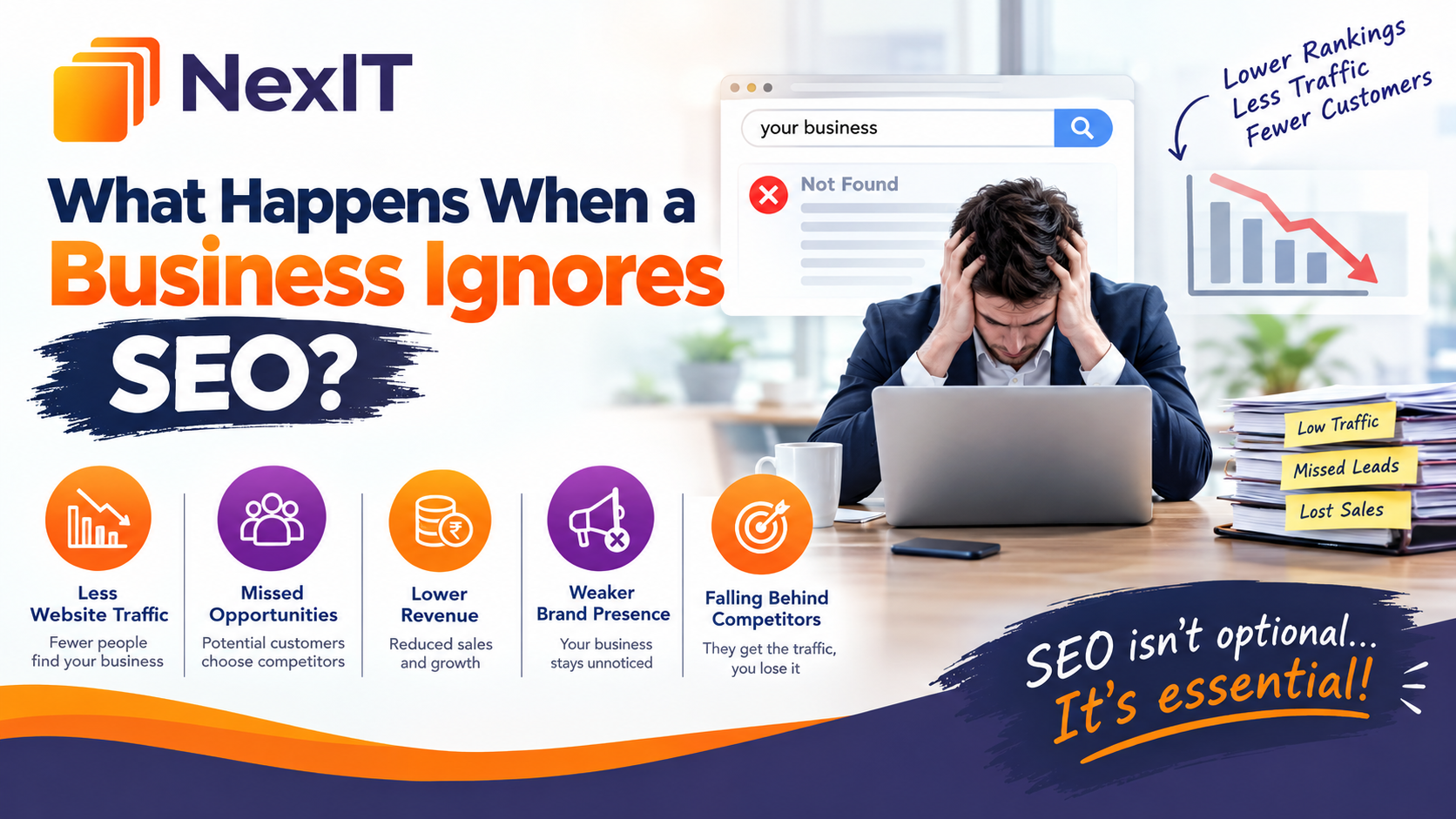
When a business ignores SEO, its website may become increasingly difficult for potential customers to find.
The business may still offer excellent products, reliable services and valuable industry experience. However, if its website does not appear when customers search on Google, those advantages may remain invisible.
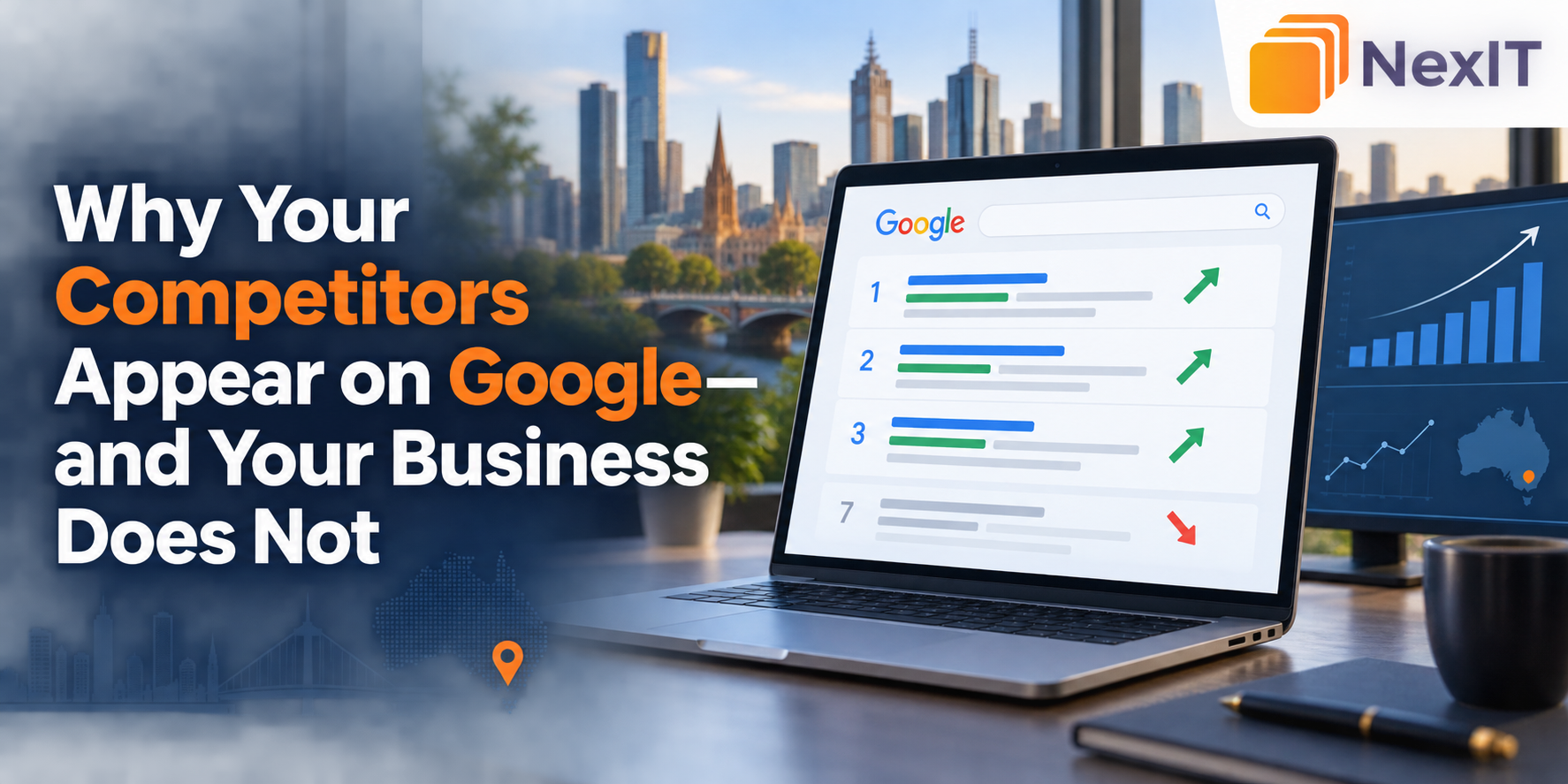
Meanwhile, competitors that invest in SEO can attract the clicks, calls, enquiries and sales that the business is missing.
Ignoring SEO does not always cause an immediate problem. A website may continue receiving visits from existing customers, direct searches, referrals or paid advertisements.
The consequences usually become clearer over time as competitors build stronger rankings, publish useful content, earn customer reviews and increase their online authority.
Understanding these consequences can help Australian businesses see why SEO is an ongoing part of digital growth rather than an optional website feature.
SEO Helps Customers Discover Your Business
Search engine optimisation helps search engines understand:
- What your business provides
- Which customers you serve
- Where your business operates
- Which searches are relevant to your website
- Whether your content answers customer questions
- Whether your website is accessible and trustworthy
Without SEO, Google may not have enough information or confidence to display your website prominently.
This means customers searching for your exact products or services may find a competitor instead.
A business does not need to disappear completely from Google to be affected. Appearing on page three—or below the local map results—can significantly reduce how many customers discover the business.
Your Business Becomes Less Visible on Google
The most direct consequence of ignoring SEO is reduced search visibility.
Potential customers may search for phrases such as:
“SEO company Melbourne”
“website designer near me”
“IT support Melbourne”
“digital marketing agency Dandenong”
“web development services Australia”
If your website is not optimised for these searches, it may not appear where customers can easily find it.
A lack of visibility means fewer opportunities to receive:
- Website visits
- Phone calls
- Enquiry forms
- Quote requests
- Appointment bookings
- Product enquiries
- Store visits
- Qualified leads
Customers cannot consider a business they do not know exists.
Your Competitors Receive the Enquiries You Miss
Google search results are competitive.
When your business does not appear, the available clicks do not disappear. They usually go to another company.
Competitors investing in SEO may have:
- Better-optimised service pages
- More relevant website content
- Stronger local search signals
- More customer reviews
- Faster website performance
- Better mobile usability
- Relevant backlinks
- Dedicated location pages
- Helpful blog articles
- Clearer calls to action
These factors make it easier for Google to understand and recommend their websites.
Over time, competitors may build stronger positions for valuable keywords while your business becomes increasingly dependent on other marketing methods.
Want to understand how ignoring SEO may be affecting your enquiries?
👉 Book a Website Consultation
📞 Call 1300 899 259
Your Website Generates Less Organic Traffic
Organic traffic refers to visitors who find a website through unpaid search results.
Unlike paid advertisements, organic listings do not require a business to pay for every click. However, earning strong organic visibility requires ongoing optimisation, useful content and technical maintenance.
When a business ignores SEO, it may receive traffic mainly from:
- Existing customers
- Branded searches
- Direct website visits
- Social-media posts
- Email campaigns
- Paid advertisements
- Referrals
These channels can still be valuable, but ignoring organic search removes an important source of potential customers.
SEO can help a website attract visitors at different stages of the buying journey, including people researching a problem, comparing providers or preparing to make an enquiry.
You Become More Dependent on Paid Advertising
Paid advertising can generate immediate visibility, but the traffic usually stops when the advertising budget stops.
A business without organic rankings may need to continue paying for every website visitor.
This can create several challenges:
- Increasing advertising costs
- Greater competition for important keywords
- Dependence on a monthly advertising budget
- Reduced visibility when campaigns are paused
- Higher customer-acquisition costs
- Limited long-term marketing value
- Pressure to achieve immediate conversions
SEO and paid advertising can work together effectively.
However, a business that relies entirely on advertisements may have no strong organic presence to support it when advertising budgets change.
SEO can help create a longer-term source of visibility alongside paid campaigns.
Potential Customers May Trust Competitors More
Customers often use Google to evaluate the credibility of a business.
They may search for:
- The business name
- Services and locations
- Customer reviews
- Case studies
- Contact information
- Frequently asked questions
- Industry experience
- Google Business Profile
- Articles demonstrating expertise
If your business has limited search visibility, outdated information or very little helpful content, potential customers may feel less confident.
A competitor appearing consistently across search results, local listings, directories and useful articles may seem more established—even if your business provides better service.
SEO supports trust by helping customers find clear and consistent information about your business.
Your Google Business Profile May Underperform
Ignoring SEO often includes ignoring local SEO.
For businesses serving specific locations, a complete and well-managed Google Business Profile can influence visibility in Google Maps and local search results.
Without regular optimisation, a profile may contain:
- Incorrect contact information
- Outdated opening hours
- Incomplete service details
- Incorrect business categories
- Limited customer reviews
- Unanswered questions
- Old photographs
- Missing business updates
- Inconsistent address information
- Unanswered customer feedback
These issues can reduce customer confidence and make it more difficult for Google to understand the business.
Competitors with complete profiles, genuine reviews and consistent local information may receive more calls, direction requests and website visits.
Your Website May Not Target the Words Customers Use
Businesses often describe their services using internal or technical language.
Customers may use completely different terms when searching.
For example, a business may describe itself as a “digital transformation partner,” while customers search for:
- Website design company
- IT support services
- SEO agency
- Software developer
- Digital marketing company
- E-commerce website developer
Without keyword research, website pages may target phrases that have little connection with actual customer searches.
This creates a gap between what the business says and what customers type into Google.
SEO helps identify relevant search terms and use them naturally within:
- Page titles
- Headings
- Service descriptions
- Meta descriptions
- URLs
- Image ALT text
- Internal links
- Frequently asked questions
- Blog content
Ignoring this process can prevent the website from appearing for commercially valuable searches.
Your Service Pages Remain Weak or Incomplete
A website may look professional but still provide insufficient information about its services.
Businesses that ignore SEO often place every service on one short page. This gives search engines and customers limited information about each individual offering.
A well-developed service page should explain:
- What the service involves
- Who needs the service
- Which problems it solves
- What benefits it provides
- Which locations are served
- How the process works
- Why customers should choose the business
- How to request a consultation or quote
Dedicated service pages can target more relevant searches and guide visitors towards a clear next step.
Without them, important services may remain almost invisible in search results.
Your Website Content Becomes Outdated
Websites require ongoing attention.
When SEO is ignored, content may gradually become outdated or inaccurate.
This may include:
- Old service information
- Incorrect contact details
- Outdated locations
- Broken internal links
- Services the business no longer provides
- Missing new services
- Outdated team information
- Old pricing references
- Expired promotions
- Incorrect opening hours
Outdated content can confuse customers and reduce their confidence in the business.
Regular SEO reviews help ensure that website information remains useful, accurate and aligned with current customer needs.
Technical Problems Can Remain Undetected
A website can appear normal to visitors while containing technical problems that affect its performance in search results.
Common issues include:
- Pages blocked from search engines
- Missing XML sitemap
- Incorrect robots.txt settings
- Broken links
- Duplicate content
- Duplicate page titles
- Missing meta descriptions
- Incorrect canonical tags
- Slow page speed
- Mobile-compatibility problems
- Large image files
- Crawl errors
- Pages returning error codes
- Incorrect redirects
- Unsecured pages
Without technical SEO monitoring, these issues may continue for months.
Google may struggle to crawl, understand or index important pages, reducing the website’s ability to rank.
Your Website May Deliver a Poor Mobile Experience
Many customers search for businesses using mobile devices.
If a website is difficult to use on a phone, visitors may leave before reading about the service or contacting the business.
Common mobile problems include:
- Text that is difficult to read
- Buttons that are too small
- Slow-loading pages
- Images extending beyond the screen
- Complicated menus
- Forms that are difficult to complete
- Pop-ups covering important content
- Phone numbers that cannot be clicked
- Layouts that do not adjust properly
Mobile usability is important for both customer experience and search performance.
Ignoring SEO can mean these problems remain unresolved while competitors provide faster and easier mobile experiences.
Your Business Misses Local Customers
Local customers often include a suburb, city or “near me” phrase in their searches.
Examples include:
“SEO company Moorabbin”
“web developer Dandenong”
“IT support Port Melbourne”
“digital marketing agency Richmond”
“website designer Box Hill”
A business that ignores local SEO may not appear for customers searching in its service areas.
An effective local SEO strategy may include:
- Accurate business information
- Google Business Profile optimisation
- Location-specific service pages
- Local keyword targeting
- Customer reviews
- Local directory listings
- Relevant local content
- Consistent contact details
- LocalBusiness schema
- Location information on service pages
Without these signals, Google may choose competitors that have demonstrated stronger local relevance.
You Lose Opportunities to Educate Potential Customers
Many customers are not immediately ready to contact a business.
They may first search for answers to questions such as:
“How much does SEO cost in Melbourne?”
“Do small businesses need SEO?”
“Why is my website not appearing on Google?”
“Should I choose SEO or Google Ads?”
“How can local SEO generate more enquiries?”
Helpful blog content allows a business to reach customers during the research stage.
A business that does not publish useful content misses opportunities to:
- Answer customer questions
- Demonstrate expertise
- Explain its services
- Build customer confidence
- Target long-tail keywords
- Support important service pages
- Guide visitors towards an enquiry
Competitors publishing reliable content can become familiar to customers before those customers are ready to buy.
Your Online Authority Does Not Develop
Search engines consider signals that indicate whether a website is credible and authoritative.
These signals may include relevant backlinks, business mentions, customer reviews, useful content and consistent information across the web.
A business ignoring SEO is less likely to actively develop relationships and content that earn links from:
- Industry organisations
- Business directories
- Professional associations
- Suppliers
- Partners
- Local publications
- Community websites
- Relevant blogs
- News websites
Without these signals, the website’s authority may remain weak.
Competitors that consistently earn genuine links and mentions may become more difficult to outrank over time.
Your Website May Attract the Wrong Visitors
Website traffic alone does not guarantee business growth.
A business needs visitors who are genuinely interested in its products, services and locations.
Without a clear SEO strategy, a website may:
- Target irrelevant keywords
- Attract visitors outside the service area
- Rank for informational terms with no commercial value
- Provide content unrelated to its core services
- Receive visits that do not produce enquiries
Effective SEO focuses on search intent.
This means understanding whether a person wants information, wants to compare services or is ready to contact a provider.
Attracting fewer but more relevant visitors can be more valuable than generating large amounts of unsuitable traffic.
Your Website Produces Fewer Leads and Sales Opportunities
SEO is not only about rankings.
Its business purpose is to connect relevant customers with a website and help them take action.
When SEO is ignored, the website may receive fewer:
- Phone calls
- Enquiry forms
- Quote requests
- Appointment bookings
- Product purchases
- Email enquiries
- Store visits
- Consultation requests
The effect may not always be obvious because businesses cannot easily see the customers who never discovered them.
A customer who chooses a competitor after a Google search may never contact your business or mention that you were missing from the results.
Your Cost of Acquiring Customers May Increase
If organic search does not generate enquiries, a business may need to invest more heavily in other marketing channels.
These may include:
- Paid search advertising
- Social-media advertising
- Cold calling
- Email campaigns
- Print advertising
- Sponsorships
- Lead-purchasing services
- Direct mail
These methods can support a broader marketing strategy, but depending on them exclusively may increase the average cost of acquiring each customer.
SEO can help build a source of inbound enquiries from people already searching for a relevant solution.
Although SEO requires ongoing investment, its visibility can continue supporting multiple pages and services over time.
Your Competitors Build a Long-Term Advantage
SEO results generally develop gradually.
A competitor that invests consistently may continue to:
- Publish useful content
- Improve service pages
- Earn customer reviews
- Strengthen local visibility
- Build relevant backlinks
- Improve website performance
- Target additional keywords
- Expand into new service areas
- Analyse search data
- Update underperforming pages
Each improvement can strengthen its overall online presence.
The longer your business ignores SEO, the more work may be required to close the gap.
Starting later does not make success impossible, but competitors may already have years of content, authority and customer trust supporting their rankings.
A Website Redesign Alone May Not Solve the Problem
Some businesses assume that building a new website will automatically improve Google rankings.
A modern design can improve the customer experience, but design alone does not replace SEO.
A new website still requires:
- Keyword research
- Search-friendly site structure
- Dedicated service pages
- Relevant content
- Proper headings
- Optimised titles and descriptions
- Internal links
- Mobile responsiveness
- Page-speed optimisation
- Redirects from old URLs
- XML sitemap
- Search-engine indexing
- Conversion tracking
A redesign completed without SEO planning may even lose existing rankings if pages and URLs are removed incorrectly.
SEO should be included throughout the website-development process.
Ignoring SEO Makes Business Decisions More Difficult
SEO data can provide useful information about customer behaviour.
Search data can reveal:
- Which services customers search for
- Which locations generate interest
- Which pages attract visitors
- Which questions customers ask
- Which keywords lead to enquiries
- Where visitors leave the website
- Which competitors perform strongly
- Which content requires improvement
- Which services have growth potential
Without tracking this information, businesses may make marketing decisions based mainly on assumptions.
Google Search Console, Google Analytics and conversion tracking can provide evidence that helps businesses understand their online performance.
Your Brand May Appear Less Established
Customers may search for a business before deciding whether to contact it.
If they find limited information, an incomplete profile or a poorly optimised website, they may question whether the business is active or established.
Strong search visibility can help customers find:
- The official website
- Service information
- Business locations
- Customer reviews
- Contact details
- Useful articles
- Social profiles
- Directory listings
- Company information
These consistent results create a broader online presence.
Ignoring SEO may leave the brand with a limited or fragmented digital footprint.
SEO Problems Usually Do Not Correct Themselves
Waiting does not normally resolve search-performance problems.
Google may continue finding the same weak content, technical issues and inconsistent information.
SEO problems generally require deliberate action, such as:
- Fixing technical errors
- Improving page content
- targeting relevant keywords
- Optimising local listings
- Strengthening internal links
- Improving mobile usability
- Updating outdated information
- Publishing useful resources
- Earning relevant backlinks
- Tracking enquiries and conversions
The earlier these issues are identified, the sooner the business can begin building a stronger search presence.
Common Signs That a Business Is Ignoring SEO
A business may need to review its SEO strategy if:
- The website receives very little organic traffic
- Competitors consistently appear above it
- Important services do not rank
- Google Business Profile activity is low
- Website content has not been updated for years
- The site has no dedicated service pages
- Customer reviews are limited or outdated
- The website is slow on mobile devices
- Blog articles do not target customer questions
- Organic enquiries cannot be tracked
- Contact details are inconsistent online
- Technical errors remain unresolved
- The business relies almost entirely on advertising
- Google does not index important pages
These signs do not always have one cause. A professional review can identify which problems are having the greatest effect.
What Should a Business Do Instead?
A practical SEO strategy begins by understanding the business, its customers and its current website performance.
The process may include:
- Reviewing existing rankings
- Analysing organic website traffic
- Researching customer search terms
- Assessing competitors
- Checking website indexing
- Completing a technical SEO audit
- Improving service pages
- Optimising page titles and descriptions
- Creating location-specific content
- Updating the Google Business Profile
- Strengthening internal links
- Publishing helpful articles
- Improving website speed
- Collecting genuine customer reviews
- Building relevant citations and backlinks
- Tracking calls, forms and qualified enquiries
Businesses do not need to change everything at once.
The most effective approach is to identify the highest-priority problems and implement improvements according to business goals and available resources.
How Long Does SEO Take to Deliver Results?
SEO is generally a long-term strategy rather than an immediate solution.
The timeframe can depend on:
- Website history
- Current technical condition
- Competition
- Target keywords
- Location
- Content quality
- Existing authority
- Frequency of improvements
- Industry
- Available resources
Some technical or local improvements may produce earlier changes, while competitive keywords can require sustained work.
Businesses should be cautious of anyone promising guaranteed first-position rankings or immediate results.
A reliable strategy focuses on measurable progress, relevant visibility and qualified enquiries.
How Should SEO Success Be Measured?
Rankings are useful, but they should not be the only measure of success.
Businesses should also track:
- Organic impressions
- Relevant keyword visibility
- Organic website visits
- Google Business Profile interactions
- Phone calls
- Enquiry forms
- Quote requests
- Conversion rates
- Qualified leads
- Sales connected to organic search
- Performance of important service pages
SEO should contribute to meaningful business outcomes rather than traffic alone.
Why SEO Is Important for Long-Term Business Growth
Customers increasingly use search engines to find, research and compare businesses.
SEO helps ensure that your company can participate in that process.
A consistent strategy can support:
- Greater online visibility
- More relevant website traffic
- Increased brand awareness
- Stronger customer trust
- Better local visibility
- More qualified enquiries
- Reduced dependence on paid advertising
- Improved website usability
- Better marketing data
- Long-term digital growth
SEO does not replace good products, strong service or effective sales processes.
It helps potential customers discover those strengths when they are actively searching.
Ignoring SEO Does Not Stop Customers From Searching
Customers will continue using Google whether your business invests in SEO or not.
They will search for services, compare providers, read reviews and choose companies that are easy to find and understand.
If your website does not appear, customers may assume another provider is the better or more established choice.
The real cost of ignoring SEO is not simply lower rankings.
It is the combined value of the visits, enquiries, customers and long-term visibility that your business may be losing to competitors.
Ready to Stop Losing Visibility to Your Competitors?
If your website is not generating enough visibility, traffic or enquiries, it may be time to review your SEO strategy.
NexIT Solutions helps businesses across Melbourne and Australia identify search-performance gaps, improve their website visibility and attract more relevant customer enquiries.
We focus on practical SEO improvements based on your services, customers, target locations, competition and business objectives.
Book a Website Consultation →
Or call 1300 899 259 and tell us what you would like your website to achieve.
What Happens When a Business Ignores SEO?