

Building an app can help a business serve customers, simplify daily work or introduce a new digital service. Before investing, most businesses want to know how long development will take.
There is no fixed timeline for every project. A simple booking app is very different from a platform with accounts, payments and multiple integrations. The schedule depends on the features, technical requirements and how quickly decisions are made.
How long does app development usually take?
As a broad guide, a straightforward app may take around 2–4 months. A medium-sized app with accounts, integrations and more detailed workflows may take 4–6 months. A complex platform can take six months or longer.
These are planning estimates, not guaranteed delivery dates. Some stages overlap, while changing requirements or delayed approvals can extend the schedule.
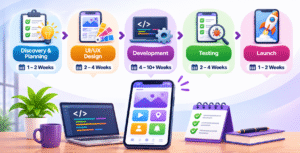
| Development stage | Indicative timeframe | Main activities |
|---|---|---|
| Discovery and planning | 1–2 weeks | Define goals, users and scope |
| UX and UI design | 2–4 weeks | Map user journeys and design screens |
| Development | 4–10+ weeks | Build features and integrations |
| Testing and refinement | 2–4 weeks | Check functionality and compatibility |
| Release preparation | 1–2 weeks | Complete deployment and launch checks |
What affects the app development timeline?
Several decisions influence the amount of work involved.
Features and functionality
An app with a few essential screens is usually quicker to build than one with messaging, real-time updates, payments or location features. Every feature needs design, development and testing.
Platform choice
Building for iOS, Android or both affects the plan. Cross-platform development can allow code sharing, but device-specific behaviour still needs testing.
Integrations and content
Connecting payment providers, booking systems or existing business software adds development and testing. Content, images and store information should also be prepared early to avoid holding up the team.
Define the scope before setting a date
Start by describing the problem the app should solve and who will use it. List the essential tasks, then separate launch requirements from features that can wait.
Mobile app development compny Somerton can help businesses turn an initial idea into a clear scope, with priorities that can be estimated and reviewed.
A minimum viable product (MVP) focuses on the smallest practical version that delivers value. You can gather feedback from users before investing in additional features.
What can delay an app project?
Even a well-planned project can face delays. Common causes include:
Changing requirements: Major additions can affect design, development and testing.
Slow approvals: Feedback delays can leave completed work waiting.
Third-party dependencies: Payment providers and external platforms may have their own setup processes.
Technical issues: Existing systems or device compatibility may require extra work.
Limited testing time: Rushing checks can allow problems to reach users.
Agree on how changes will be reviewed. Before adding a request, consider its effect on cost, delivery and existing priorities.
How do you choose the right development partner?
A useful estimate should be more than a launch date. Ask the team to explain its stages, deliverables, assumptions and responsibilities.
When comparing Mobile app development Somerton, look for a team that asks about your users, business processes, security needs and future plans before suggesting a technical approach. Discuss progress reviews, testing and how changes will be managed.
Clarify post-launch support too. Maintenance, bug fixes and operating system updates may be included or priced separately.
How can you keep the project on schedule?
You can help development move smoothly by preparing key information early:
Confirm the goals and essential features.
Nominate one person to coordinate feedback.
Provide content, branding assets and system access.
Review designs and working versions by agreed dates.
Keep optional ideas in a later-release list.
For businesses working with Mobile app development compny Somerton, clear communication and agreed milestones make it easier to identify risks and manage expectations.
What happens after the app is built?
Development does not end when the app is submitted or released. Store reviews, deployment checks and final fixes can affect the launch date. After release, monitor performance, resolve issues and plan improvements.
Set aside time and budget for maintenance. Apps need updates as operating systems change, security requirements evolve and user expectations develop.
Conclusion
App development time depends on features, platforms, integrations and the decisions made during the project. A clear scope, realistic milestones and regular communication help keep work organised without sacrificing testing or quality.
If you are planning an app for your business, NexIT Solutions can help you assess requirements, prioritise features and understand the steps involved before development begins.
Talk to a NexIT Expert
New Enquiries: 1300 899 259 | Support Team: [email protected]
REQUEST A FREE CONSULTATION