
f you’ve ever thought, “Should my business have its own app?”, you’re not alone. Customers now expect to book, order, pay, and get support from their phones. Understanding how mobile app development works helps you decide whether an app is the right investment and how to avoid costly mistakes.
What Is Mobile App Development?
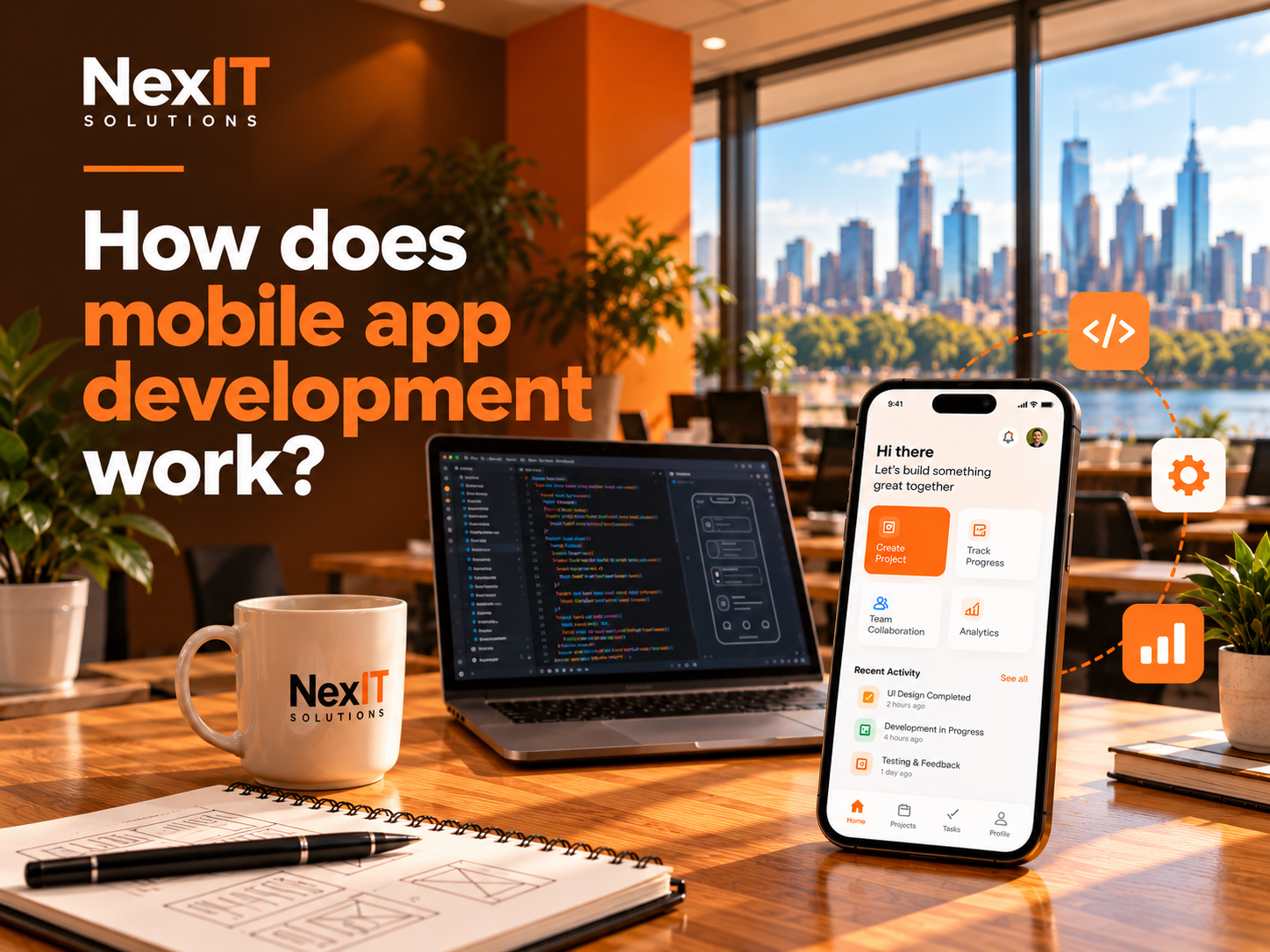
Mobile app development is the process of planning, designing, building, testing and launching software that runs on smartphones and tablets. Apps are usually built for iOS (Apple), Android (Google), or both.
A business app can do many things, such as:
- Take bookings or orders
- Process payments securely
- Send personalized notifications
- Reward loyal customers
- Connect staff with internal tools on the go
Do You Need an App or Is a Website Enough?
A responsive website is often enough if your goal is to share information and generate enquiries. An app makes more sense when you need:
- Repeat engagement: customers use your service often, such as ordering, booking or tracking.
- Device features: camera, GPS, push notifications or offline access.
- A smoother experience: faster, more personalised journeys than a browser can offer.
- Customer loyalty: an icon on someone’s home screen keeps your brand front of mind.
If you’re unsure, a good development partner will talk through your goals before recommending anything.
The 6 Stages of Mobile App Development
1. Discovery and Planning
This stage defines your audience, goals, must-have features and budget. Skipping it is the most common reason apps go over time and cost.
2. UX and UI Design
Designers create wireframes and visual mockups showing how the app looks and flows. Good design makes the app feel intuitive from the first tap.
3. Development
Developers build the front end (what users see) and the back end (servers, databases, integrations). You’ll choose between:
- Native apps: built separately for iOS and Android for maximum performance.
- Cross-platform apps: one codebase for both platforms, usually faster and more cost-effective.
4. Testing
The app is tested on real devices for bugs, speed, security and usability. Thorough testing protects your reputation at launch.
5. Launch
Your app is submitted to the Apple App Store and Google Play, which each have their own review requirements and timelines.
6. Support and Growth
Launch is the beginning, not the end. Ongoing updates, security patches and new features keep your app relevant as devices and customer needs change.
How Long Does It Take and What Does It Cost?
Timelines and budgets depend on complexity. A simple app may take a few months, while a feature-rich platform with integrations and user accounts can take considerably longer. The main cost drivers are:
- Number and complexity of features
- Platforms (iOS, Android or both)
- Custom design requirements
- Third-party integrations (payments, CRMs, maps)
- Ongoing maintenance
The best way to control cost is to launch with a focused first version, then expand based on real user feedback.
Why Choose a Custom Mobile App?
Template builders can work for very simple needs, but a custom mobile app is designed around your business processes and customers. That means:
- A unique brand experience
- Features that fit how you actually work
- Scalability as your business grows
- Full ownership and control over your data
Why Work with a Local Team?
Working with a local partner for app development Melbourne businesses can trust means easier communication, a team that understands the Australian market and compliance expectations, and support that’s in your time zone when you need it.
Tips for a Successful App Project
- Start with the problem you’re solving, not the features you want.
- Define your core features first, and save the extras for later versions.
- Involve real users early with prototypes and feedback.
- Plan your marketing so people actually discover your app.
- Budget for maintenance after launch.
Frequently Asked Questions
How long does it take to build a mobile app?
Most projects take from a few months to over half a year, depending on scope and complexity.
Should I build for iOS, Android or both?
It depends on where your customers are. Cross-platform development is a popular way to reach both without doubling the cost.
Can I update my app after launch?
Yes. Regular updates add features, fix issues and keep your app compatible with new devices.
Will I own the app?
With a custom build, you should own the code and your data. Confirm this in writing with any developer.
Ready to Turn Your Idea into an App?
Whether you have a detailed plan or just a rough idea, our team can help you map out the right approach, timeline and budget.
Talk to our team today: 1300 899 259