
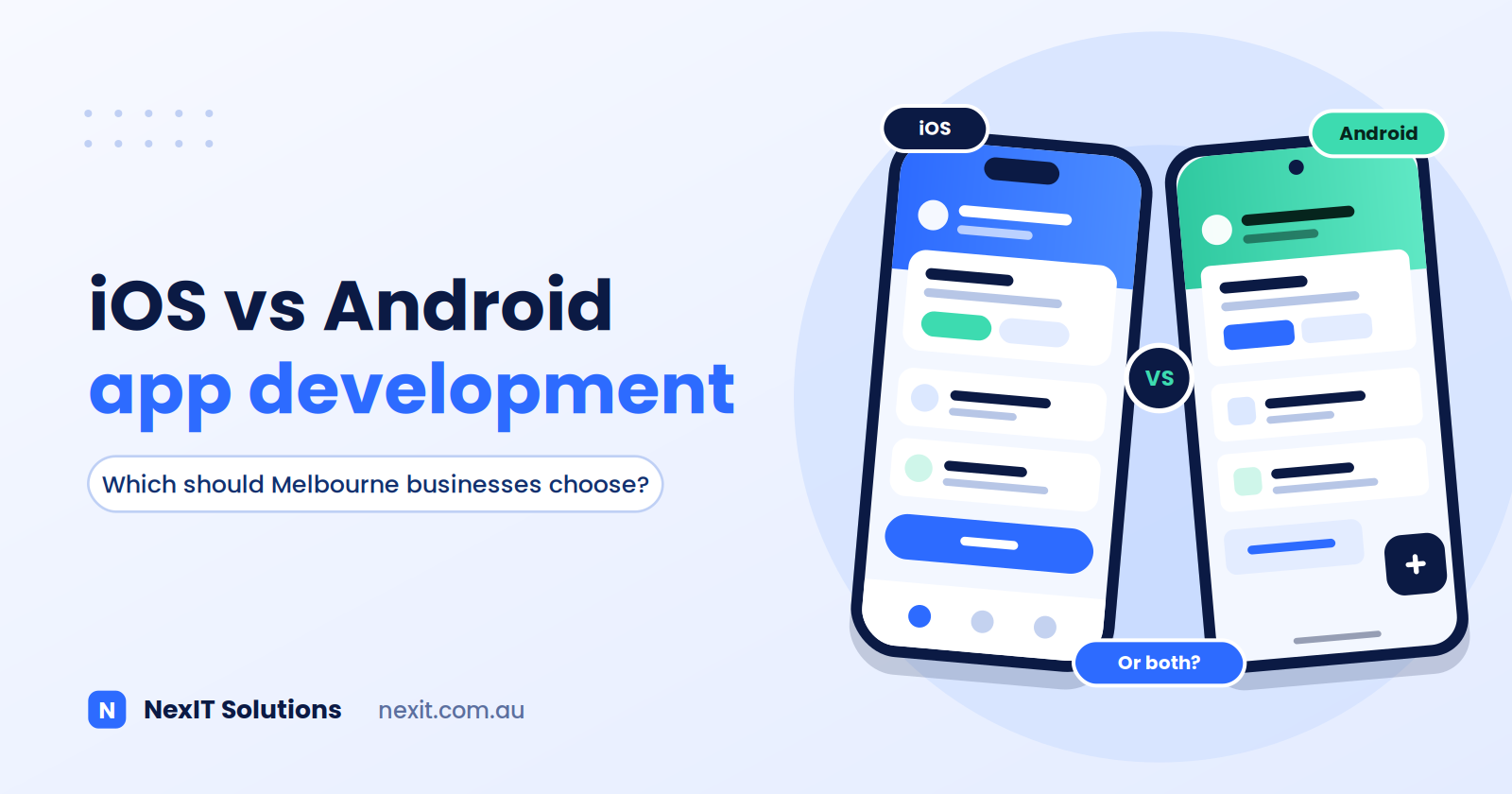
You’ve decided your business needs an app. Now comes a question that surprises a lot of people: do you build it for iPhone, Android, or both?
It sounds like a technical choice, but it’s really a business one. The platform you start with affects who can use your app, how much it costs, how quickly you can launch and how much work it takes to maintain.
Here’s how to decide without guesswork.
Start with your audience, not the platform
Before comparing technology, find out which devices your actual users prefer.
You probably already have this data. If your website has Google Analytics, check the device and operating system reports to see how many visitors use iPhone and how many use Android. It takes a few minutes and gives you far better evidence than a general statistic. It’s also a good reminder that your website and your app work as a pair: if your mobile app development Melbourne partner has set up tracking properly, you’ll learn a lot about your customers before you spend anything on an app.
For internal apps, simply ask your team what phones they use, or decide what devices the business will supply.
iOS app development: what to know
Strengths
- Strong share of the Australian market, particularly among consumers
- A relatively small range of devices, which makes design and testing simpler
- Users who are generally comfortable paying for apps and in-app purchases
- A polished, consistent user experience
Things to consider
- Apple’s App Store review is thorough, so plan time for approval and possible changes
- Publishing requires an Apple developer account with an annual fee
- Apple’s design and privacy rules are strict, and your app needs to follow them
Android app development: what to know
Strengths
- Large user base, especially among people who prefer a wider choice of phones and price points
- Flexible publishing through Google Play, with a simpler setup process
- Easier to customise in certain areas, which can help with specialised or business-specific apps
Things to consider
- A far larger range of devices, screen sizes and software versions, so testing takes more effort
- Some older phones don’t update, which means you may need to support older versions
- Design needs extra care to look consistent across different manufacturers
How they compare in practice
Audience. iOS usually leads for consumer-facing apps in Australia. Android may lead in some industries, age groups or internal business setups.
Cost. Building two separate native apps costs more than building one. The extra cost comes mainly from developing and testing for two platforms, not from one platform being inherently pricier.
Timeline. One platform launches faster. Android testing can take longer because of the number of devices, while iOS review can add waiting time at the end.
Maintenance. Both platforms release major updates every year, and your app needs to keep up. Budget for ongoing updates on whichever platform you choose.
Features. Both support notifications, location, camera access, payments and offline use. A few advanced features differ, so any specific requirement should be checked with your developer early.
Native or cross-platform?
There are two main ways to build.
Native apps are built separately for each platform, using that platform’s own tools. They offer the best performance and the closest match to each system’s look and feel, but you’re effectively building two apps.
Cross-platform apps use a shared code base to produce both an iOS and an Android version. For most business apps, such as booking, ordering, customer accounts, loyalty or staff tools, cross-platform delivers excellent results and typically costs less and launches sooner.
Native is worth considering if your app relies on demanding graphics, advanced device features or the highest possible performance.
Talk to NexIT for More Information
New Enquiries: 1300 899 259 | Support Team: [email protected]
REQUEST A FREE CONSULTATION
Do you need an app at all?
Sometimes the right answer is neither.
If your goal is to share information, take enquiries or sell simple products, a fast, well-designed website may do the job. A mobile-friendly web app can also give customers an app-like experience through their browser, with no store download required.
An honest look at whether you need an app can save thousands. Good website design services Melbourne businesses can rely on will tell you when a smarter website is the better investment, even if it means a smaller project.
A simple way to decide
- Mostly iPhone users? Start with iOS.
- Mostly Android users? Start with Android.
- A mix, or you can’t predict it? Choose cross-platform and launch on both.
- Internal staff app? Pick the platform your team already uses, or supply devices.
- Tight budget? Launch a focused first version on one platform, learn from real use, then expand.
Local factors to consider
- Your customer base. A hospitality or retail app aimed at city customers may skew differently from a tradie app used by crews in the field.
- Staff devices. If your team uses a mix of personal phones, you’ll likely need both platforms.
- Support nearby. A Melbourne-based team can meet face to face during planning, test on real devices and respond quickly if something breaks after an update.
- Brand consistency. Your app, website and store listings should look and feel like one business. This is where coordinating your app with your website design pays off.
What to ask your developer
- Which platform do you recommend for my audience, and why?
- Would cross-platform be suitable for my project?
- How will you test across different devices?
- What happens when Apple or Google release major updates?
- Who owns the code, and who manages the store accounts?
Good answers will be specific and tied to your business, not generic.
A simple checklist before you decide
- Have they shown similar projects, not just attractive designs?
- Can you speak to a past client?
- Do they ask about your users and processes first?
- Is the security and data approach clearly explained?
- Is the quote itemised, with a plan for phased delivery?
- Is ownership of code, data and accounts written into the contract?
- Is support after launch included or clearly priced?
If most of these are a yes, you’re dealing with a company worth talking to.
Talk to NexIT Solutions
Should I build an iOS or Android app first in Australia?
It depends on your audience. Many Melbourne businesses start with iOS because iPhone has the larger share of mobile use in Australia. But if your users are mostly on Android, or you’re building a staff app on Android devices, start there. Check your website analytics to see what your customers actually use.
Is it cheaper to build an Android or iOS app?
Neither is automatically cheaper. Cost depends on features, design and testing. Android can require more testing time because of the range of devices, while iOS requires working within Apple’s review process. Building for both separately costs more than building for one.
Can I build one app for both iOS and Android?
Yes. Cross-platform development lets one code base produce both versions. It’s a popular choice for business apps because it can reduce cost and launch time, though very demanding apps may still benefit from native development.
How long does it take to build a mobile app?
A simple app can take a few months, while a feature-rich one with accounts, payments and integrations takes longer. Launching a focused first version is usually the quickest route.
Do I need an app, or is a mobile-friendly website enough?
If you mostly need to share information or take enquiries, a good website may be enough. An app makes sense when customers use your service often, or you need features like push notifications, offline access or device integration.
Not sure which is right for your business?
The best choice depends on what your website needs to do for you, and a short conversation usually makes it clear. NexIT Solutions helps Melbourne businesses plan, design and build websites on WordPress, custom platforms and everything in between, and we’ll tell you honestly which one fits.
📞 Call NexIT Solutions today: 1300 899 259