


Having an app idea is exciting, but turning it into a working product takes time, money and careful planning. Before starting development, it is worth finding out whether people actually need the app, understand its purpose and would be willing to use it.
Testing an idea early does not require a finished product. You can learn a great deal through conversations, simple prototypes and small experiments. The goal is to reduce uncertainty before committing to a full development project.
Why should you test an app idea first?
An idea that sounds useful in a planning meeting may not solve a real customer problem. Potential users might already have another way to complete the task, or they may not consider your proposed features important.
Testing helps you discover these issues before they become expensive development changes. It can also help you identify the features people value most, understand their expectations and make better decisions about your first release.
Instead of asking whether people like your idea, find out whether they would genuinely use it.
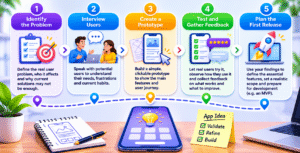
Start with the problem you want to solve
Before thinking about screens, colours or features, describe the problem your app is intended to address. Be specific about who experiences it, when it happens and why existing solutions may not be enough.
For example, a local service business might want an app that allows customers to book appointments, receive updates and manage their requests. The important question is whether customers actually want these tasks in an app or would prefer a simpler booking website.
If you are exploring mobile app development Reservior, begin by understanding the needs of your intended users. Speak with people who experience the problem rather than relying only on assumptions from within your business.
Test your idea without building the full app
You can test different parts of an app concept using relatively simple methods. Choose an approach that matches what you need to learn.
Talk to potential users
Interview people who fit your intended audience. Ask about their current habits, frustrations and how they handle the problem today.
Use open questions such as:
How do you currently manage this task?
What makes the process difficult?
Which part takes the most time?
Have you tried another solution?
What would make you consider using a new app?
Avoid leading questions that encourage people to agree with your idea. Listen for repeated problems and specific examples.
Create a simple landing page
A landing page can explain the proposed app, its main benefit and the problem it aims to solve. Include a clear action, such as joining a waiting list or registering interest.
The responses can help you understand whether the concept attracts attention. However, page visits alone do not prove that people will become regular users or paying customers.
Build a clickable prototype
A clickable prototype shows how the app might look and how users would move between screens. It does not need a working database or complete functionality.
Ask potential users to complete realistic tasks with the prototype. Watch where they hesitate, misunderstand a button or struggle to find the next step.
Test the process manually
If your app idea involves bookings, orders or requests, you may be able to manage a small trial manually before automating it. This helps you understand the actual workflow and identify steps that need improvement.
Decide what success looks like
Before running a test, decide what evidence would make you continue, change the idea or stop. Otherwise, it is easy to interpret any positive response as proof that the concept will succeed.
Possible measures include:
How many people show genuine interest?
Do users understand the main purpose?
Can they complete the key task without assistance?
Do they return or request another interaction?
Would they consider paying for the solution?
If you are preparing to speak with a mobile app development company Reservior, having these findings can make early project discussions more focused. You can explain what users need instead of presenting an untested list of features.
Learn from feedback and improve the concept
Not every test will produce the response you expect. Some users may like the idea but find the proposed process confusing. Others may identify a more important problem that your original concept did not address.
Look for patterns across feedback rather than changing the app based on one person’s opinion. Separate essential requirements from optional suggestions.
You may discover that the original idea needs fewer features, a different audience or a simpler way to solve the problem. These findings are useful because they help you avoid investing in functionality that users may not need.
When is your app idea ready for development?
You do not need perfect certainty before beginning development. However, you should have enough evidence to make informed decisions about the first version.
Consider moving forward when:
You can clearly explain the problem and intended audience.
Potential users have confirmed that the problem matters to them.
The main user journey has been tested.
You know which features are essential for the first release.
You have a realistic budget and project scope.
A focused first version, often called a minimum viable product (MVP), can help you launch the core experience and gather feedback before adding more features.
For businesses considering mobile app development Reservior, this preparation can make the project easier to scope and prioritise.
How should you choose a development partner?
Once the idea has been tested, look for a development team that understands your business goals and can explain the technical decisions involved.
Ask how requirements will be documented, how progress will be reviewed, what testing is included and what support is available after launch. Discuss ownership, security, integrations and future maintenance before agreeing to a project.
A reliable mobile app development company Reservior should be willing to discuss your findings, question unnecessary features and help define a practical first release.
Conclusion
Testing an app idea before development helps you understand customer needs, identify useful features and avoid spending money on assumptions. Start with the problem, gather honest feedback, test a simple version and use the results to shape your first release.
If you are ready to turn a tested concept into a practical product, NexIT Solutions can help you assess the requirements and plan the next steps for your business in Reservoir.
New Enquiries: 1300 899 259 | Support Team: [email protected]
REQUEST A FREE CONSULTATION