
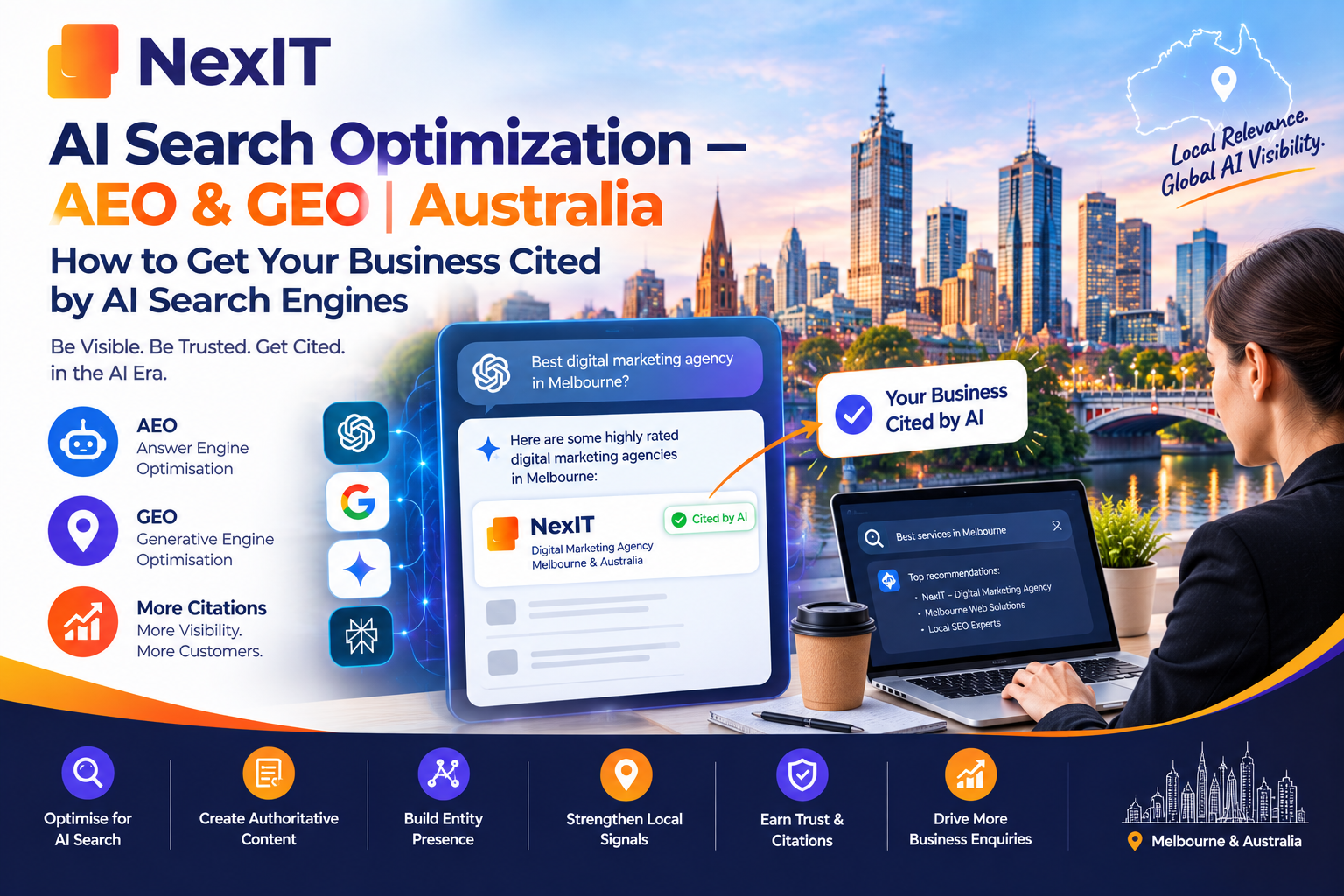
AI Search Optimization — AEO & GEO | Australia strategies ensure that your business is the one recommended when customers ask ChatGPT, Claude, Perplexity, or Google Gemini for local providers.
We’ve seen it plenty of times. A business has excellent Google rankings and steady website traffic, but suddenly their inbound leads start dropping. That is because modern consumers are changing how they search. Instead of looking through a list of links on a standard search page, they are asking AI assistants to find, compare, and pick businesses for them.
That’s usually not a traditional SEO visibility problem. It’s an AI search engine optimization problem.
A practical digital strategy shouldn’t simply look to optimize for standard keyword counts anymore. The goal is to make it easy for generative AI tools to scrape your brand data, understand your credibility, and cite you as the trusted answer.
We Start With the AI Scraper Journey
Before updating website elements or adjusting layout formats, you must look at your technical site structure from a machine-learning perspective.
If an AI web crawler lands on your digital footprint for the first time, it should be able to instantly pull clean answers to three core questions:
What specific problems does this business solve?
Are there verified, factual reference points proving their expertise?
Is their structured data formatted clearly for LLM (Large Language Model) processing?
An old, disorganized site structure makes those specific answers much harder for AI models to verify than they ever needed to be.
Important information gets trapped inside poorly coded layout blocks, service data lacks schema markup, and third-party references are missing.
Rather than trying to trick the algorithms, rebuild your entire digital experience around structuring clear, authoritative answers.
The First Change: Make the Brand Authority Clear
One of the easiest mistakes to make with a website is trying to sound impressive with vague corporate fluff instead of stating hard facts.
Phrases like:
“Deploying game-changing paradigms for your digital path.”
sound grand, but an AI model cannot unpack what service you actually provide from that sentence.
Change the approach.
The opening text sections need to tell both humans and AI bots exactly what the business does, who it helps, and what problems it solves.
That means clearer service breakdowns, direct informational headlines, and schema-supported data.
No guessing.
No making AI engines struggle through pages of jargon just to find out if you genuinely operate in Melbourne or Sydney.
Is Your Website Highly Ranked on Old Search Engines But Invisible on AI Platforms?
This is one of the very first things we audit.
You may not need to build a completely new website platform from scratch. Sometimes a few targeted changes to your backend technical schema, structured text layouts, internal data linking, or digital brand mentions can make a massive difference in how AI models perceive your authority.
A proper optimization review can identify exactly where your brand is dropping out of the AI recommendation journey.
Want to know what’s holding your generative engine rankings back?
👉 Book a Website Consultation
📞 Call 1300 899 259
Make the Site Content Easier for Machines to Process
An AI search model shouldn’t need to piece together broken data snippets to verify your business credentials.
Simplify your content structure and organize technical text blocks around the natural language queries that consumers use when speaking to AI assistants.
Instead of asking:
“How many times can we repeat this keyword?”
ask:
“How clearly does this sentence answer the specific user problem?”
That small shift changes your entire content hierarchy from top to bottom.
The Service Pages Need to Provide Direct Answers
A service page shouldn’t just state what you offer.
It should serve as the ultimate, definitive factual source for that topic.
Structure your landing pages around clear, conversational question-and-answer formats that align with real search queries:
What does the specific technical service include?
What verified commercial problems does it solve?
How does the operational process work?
What third-party reviews or industry data validate these claims?
Why is this business the most trusted option in Australia?
Answering these questions transparently builds immense brand equity for standard SEO while turning your pages into a premium source for Answer Engine Optimization (AEO) and Generative Engine Optimization (GEO).
We Build With Future Technologies in Mind — Not Just Traditional Google
A corporate asset needs to be easily discoverable today, but building for standard algorithms is useless if you get completely left behind by the AI search revolution.
Effective modern web development combines technical backend optimization with semantic content layouts that support future search visibility and a flawless user experience.
We consider things such as:
- Semantic HTML markup and clean internal linking
- Fast page loading speeds for instant bot crawling
- Custom schema markup integration
- Search intent and conversation paths
The critical factor is that these technical elements work together seamlessly.
We are not interested in old keyword stuffing methods.
The page needs to make complete sense to the human reading it first, which naturally makes it easier for AI models to summarize and recommend.
Ready to Optimize Your Business for the Future of Search?
If your website captures old search impressions but fails to appear in generative AI search summaries, a clear technological gap is at play.
NexIT Solutions helps forward-thinking brands across Melbourne and Moorabbin plan, design, and optimize web properties around real user behavior and emerging AI trends.
Let’s prepare your business for the next era of search.
Book a Website Consultation →
Or call 1300 899 259 and tell us what you’d like your website to do better.
AI Search Optimization — AEO & GEO | Australia